
Wood defects in Silver fir (Abies alba Mill.) from mixed uneven-aged forest stands
iForest - Biogeosciences and Forestry, Volume 19, Issue 4, Pages 321-328 (2026)
doi: https://doi.org/10.3832/ifor4950-019
Published: Aug 24, 2026 - Copyright © 2026 SISEF
Research Articles
Abstract
Knowledge of the quantity and quality of forest wood assortments obtainable from trees is crucial for their economical utilization. In Bosnia and Herzegovina, the quality assessment and classification of forest wood assortments are carried out according to Yugoslav standards (JUS), which base the grading process on the dimensional characteristics of assortments (diameter and length), as well as the presence, size, and frequency of wood defects. Considering the previously emphasized importance of wood defects in the roundwood classification system, the main aim of this study was to identify wood defects in silver fir (Abies alba Mill.) and to analyze the influence of assortment characteristics (diameter and position along the stem), and tree attributes (diameter at breast height and position within the stand based on Kraft’s classification) on the size of specific defects. The study was conducted in uneven-aged, mixed silver fir and spruce stands with beech. The length and diameter of all processed wood assortments, as well as the presence and size of wood defects, were determined immediately after felling. Analysis of the produced assortments revealed the following wood defects: knots, wet heart, rot, damage caused by physical and mechanical influences, pith eccentricity, compression wood, curvature, scars, ingrown bark, split tree stem, ring shake, heart shake, double heart, brown stain, insect damage, ellipticity, and taper. Smaller wood defects that significantly affect the quality of wood assortments, primarily knots and taper, were generally observed in the lower sections of the stem. The only notable exception is the wet heart defect, whose size tends to decrease from the base of the stem toward the crown. These findings confirm that the lower part of the stem is the most valuable, not only due to its larger diameter but also because of its superior wood quality. Continued research is essential to expand the database of wood defects and to develop reliable models that can be integrated into modern harvesting technologies.
Keywords
Conifers, Wood Quality, Knots, Wet Heart, Rot, Bosnia and Herzegovina
Introduction
Wood utilization is closely linked to understanding and identifying wood defects, which are defined differently in the literature. According to Côté ([16]), a wood defect is any characteristic that reduces its market value from an economic perspective. This may include abnormalities that decrease the wood’s strength or features that limit its applicability for specific uses. Therefore, identifying wood defects is a crucial step in evaluating timber quality before further processing ([46]). In Bosnia and Herzegovina, quality assessment and classification of forest wood assortments are conducted in accordance with Yugoslav (JUS) standards. The Institute for Standardization of Bosnia and Herzegovina, as a state scientific and professional institution, has adopted European Standards for roundwod as BAS EN standards, whose use is voluntary. Yugoslav standards ([19]) were, and in Bosnia and Herzegovina have remained, mandatory in commercial relations between forestry and the wood industry. Implementing BAS EN standards requires comprehensive preparatory activities, including drafting and adopting all relevant legislation, implementing professional activities related to planning (primarily tree classification and assortment tables), and providing adequate employee training ([25]). The grading process in JUS standards is based on the dimensional characteristics of wood assortments (diameter and length), as well as on the presence, size, and frequency of wood defects ([23], [25]). A thorough analysis of JUS and BAS EN standards reveals that, regarding the measurement methods for most wood defects (including curvature, twist, taper, knots, cracks, etc.), there are no major differences; in other words, the measurement procedures are largely harmonized. Nevertheless, certain distinctions remain, primarily concerning the precision of specific property measurements. For example, EN standards define ring shake and heart shake measurements in millimeters, while JUS standards use centimeters. Moreover, EN standards provide precise specifications for the starting points of measurements for individual properties (such as ovality, taper, and the number of annual rings), which is not the case in JUS standards ([25]).
This study focuses on silver fir (Abies alba Mill.), one of the most economically significant tree species in Bosnia and Herzegovina. It accounts for 23% of the gross volume across high forests ([43]). Silver fir is predominantly distributed throughout the hilly and mountainous regions of Bosnia and Herzegovina ([33]), and, more broadly, it occurs in the mountain ranges of eastern, western, southern, and central Europe ([47]). In Bosnia and Herzegovina, it typically grows at elevations between 400 and 1300 meters above sea level ([28]). Within local forest communities, silver fir is commonly associated with beech and spruce, and in many mountainous habitats, it also coexists with Scots pine ([18]). Silver fir plays a crucial ecological and silvicultural role in managing mixed forest stands because of its deep root system, rapidly decomposing litter, and high shade tolerance, which contribute to the long-term stability of these ecosystems ([47]).
Classification of silver fir wood assortments into quality classes depends on the occurrence of tree defects ([37]). Karahasanović ([20]) identifies the most common wood defects in silver fir as reaction (compression) wood, spiral grain, ring shake, insect damage, rot, and irregular growth ring patterns. Cufar & Zupančić ([14]) emphasize ring shake as a particularly significant defect in silver fir, alongside other typical conifer defects such as stem curvature, pith eccentricity, compression wood, spiral grain, knots, uneven increment, rot, and insect damage. Pintarić ([28]) further notes that in mature silver fir trees growing in uneven-aged forests in Bosnia and Herzegovina, very narrow rings form initially due to light deficiency, followed by rapid diameter growth and ring shake as light availability increases, which negatively impacts wood quality. According to Rebula ([32]), silver fir wood is generally of lower value than spruce, mainly because of the higher frequency of heartwood defects such as ring shake and wet heartwood.
Knots are the most common natural defect, over which foresters have limited control. The effect of knots on wood grade depends on their size, number, whether they are encased or intergrown, and whether they are sound or decayed ([16]). Natural pruning, caused by limited sunlight, results in dead knots in the lower sections of the stem, while sound knots are typically found in the upper parts ([41]). The presence of numerous live branches, along with many dead branches and encased knots, reduces the value of silver fir stands ([29]).
Despite the negative impacts of wood defects, the value of assortments can be enhanced by certain “desirable” defects ([15], [4]). For example, Sopushynskyy et al. ([34]) emphasize that silver fir stems with wavy grain represent a unique material for manufacturing high-value products in the wood industry.
In addition to manual quality control processes, X-ray scanning technologies are increasingly used for wood defect detection ([2], [17], [26]). In forest harvesting activities, computer-assisted optimal bucking methods increase the economic value of harvested trees. Bucking decisions largely depend on log quality grades, which are mainly influenced by surface characteristics such as stem defects and stem form ([1]).
Previous studies have also focused on the value of silver fir individual trees. Petráš et al. ([27]) determined that silver fir and spruce trees with diameters ranging from 60 to 90 cm possess the highest financial value, estimated between €80 and €95 per cubic meter. According to Rebula ([32]), the most valuable silver fir trees have diameters at breast height between 40 and 55 cm. Beljan et al. ([7]) modeled the price trends of beech and silver fir assortments over a 140-year period, using data from the Brinje Forestry Administration in Croatia. Their projections indicate that prices for assortments of these widely utilized tree species are expected to remain stable in the near future.
According to the latest statistical data, the most valuable conifer assortments, saw and veneer logs, accounted for 35% of the total forest wood production in Bosnia and Herzegovina in 2024. From 2020 to 2024, the price of conifer logs has shown a steady upward trend. In 2021, prices increased by 3.4%, and in 2022 by 22.41%, compared to 2020 levels. In 2023, prices increased by 27.45% relative to 2020, and in 2024, they increased by 27.02% compared to 2020. The average price of conifer logs in 2024 was €83.47 per cubic meter, a slight decrease from €83.75 per cubic meter in 2023 ([8], [9], [10], [11]).
This study focuses on identifying wood defects in silver fir and analyzing how characteristics such as diameter, position along the stem, and tree attributes like diameter at breast height and position within the stand affect defect size. Additionally, we aimed to collect data on these defects to support the development of automated measurement systems for detecting and classifying wood assortments during mechanical felling and processing. Specifically, the following research questions have been addressed: (i) What are the most common wood defects in silver fir trees? (ii) How do tree and assortment characteristics influence the size of wood defects? (iii) How can knowledge of wood defects improve the efficiency of mechanical felling and processing?
Material and methods
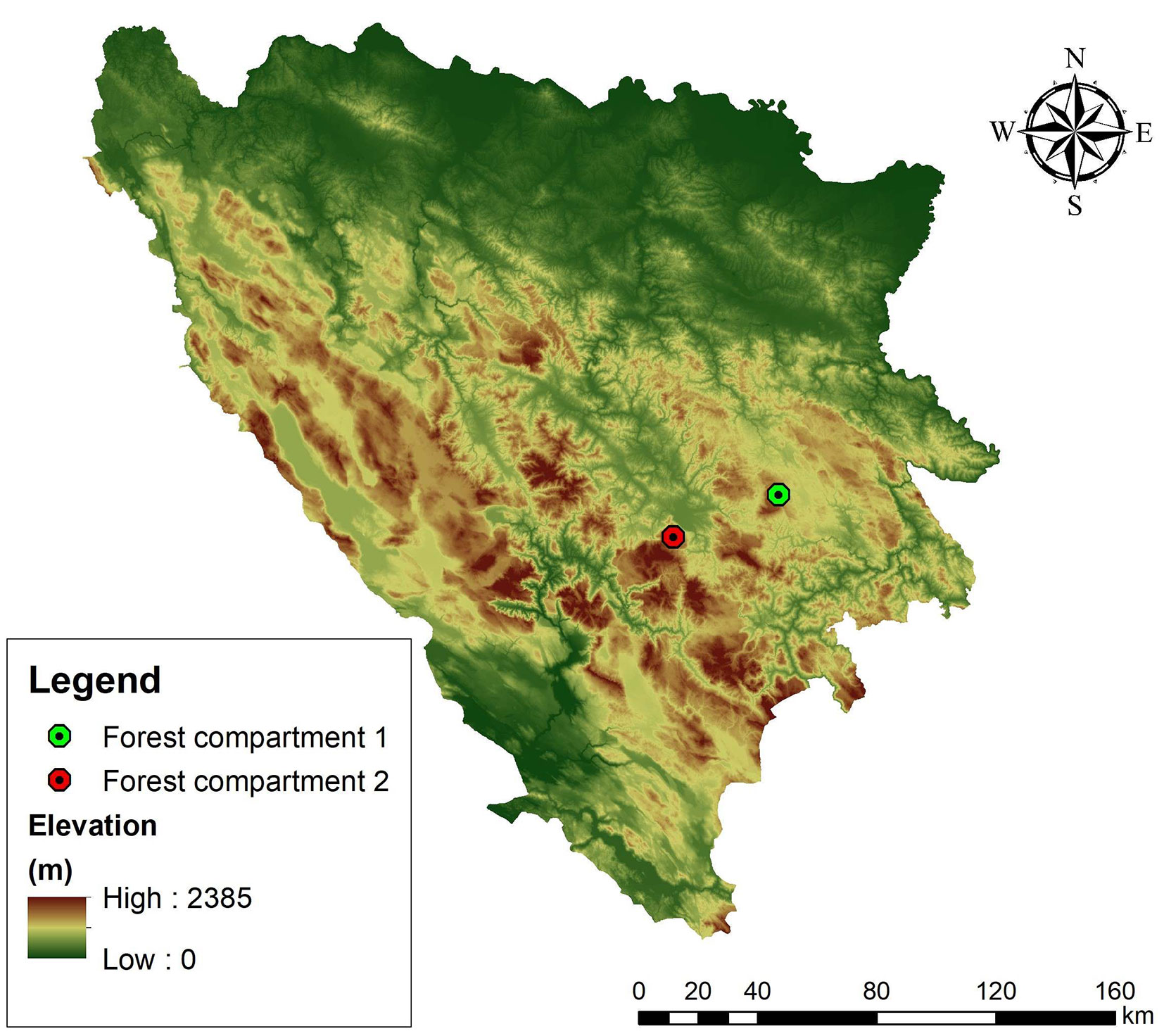
The study was conducted in two forest compartments in eastern Bosnia and Herzegovina, within an uneven-aged mixed forest composed of silver fir, spruce, and beech trees, growing on limestone and dolomite substrates. Forest compartment 1 is located at 43° 54′ 07″ N and 18° 42′ 27″ E, while compartment 2 is situated at 43° 45′ 52″ N and 18° 16′ 24″ E (Fig. 1). The average elevation is 1204 and 1370 m a.s.l. in compartment 1 and compartment 2, respectively. Terrain slope in the two compartments ranges from 10% to 30%. In 2023, trees in both compartments were marked for felling according to the group selection system principles. Field activities were conducted in March and May 2024 and involved a total of 45 silver fir trees. To minimize sampling bias, trees were analyzed consecutively along the felling lines, regardless of their external characteristics.
Fig. 1 - Map of the study area.
We measured the diameter at 1.3 m above ground (DBH) using a caliper. Sampled trees were assigned to one of five categories according to Kraft’s classification ([22]): predominant, dominant, co-dominant, suppressed, or overtopped.
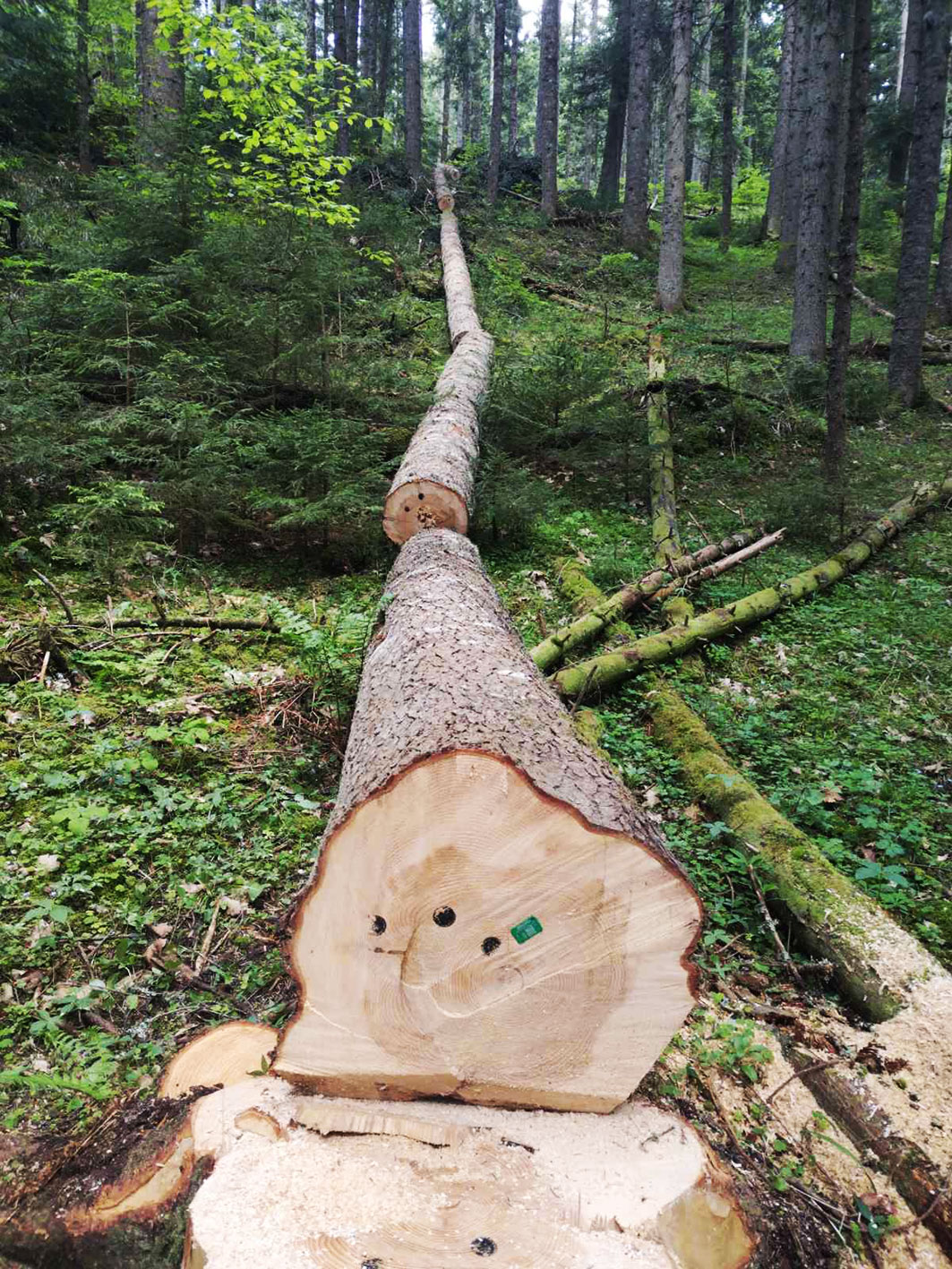
The cut-to-length processing method was used (Fig. 2). We measured the length of all processed assortments using a measuring tape immediately after felling. Diameter, including bark, was measured with a caliper at designated points: crosswise (maximum and minimum), with values rounded down to the nearest centimeter. Diameters were recorded at three positions along each wood assortment: the thicker end, the middle of the length, and the thinner end. For the first assortment taken from the base of the tree, two crosswise diameters were measured at the root collar end, located at a maximum distance of 1 m from the thicker end, rather than at the thicker end. The volume of forest wood assortments was determined using Huber’s formula ([3]).
Fig. 2 - Felled trees processed into forest wood assortments.
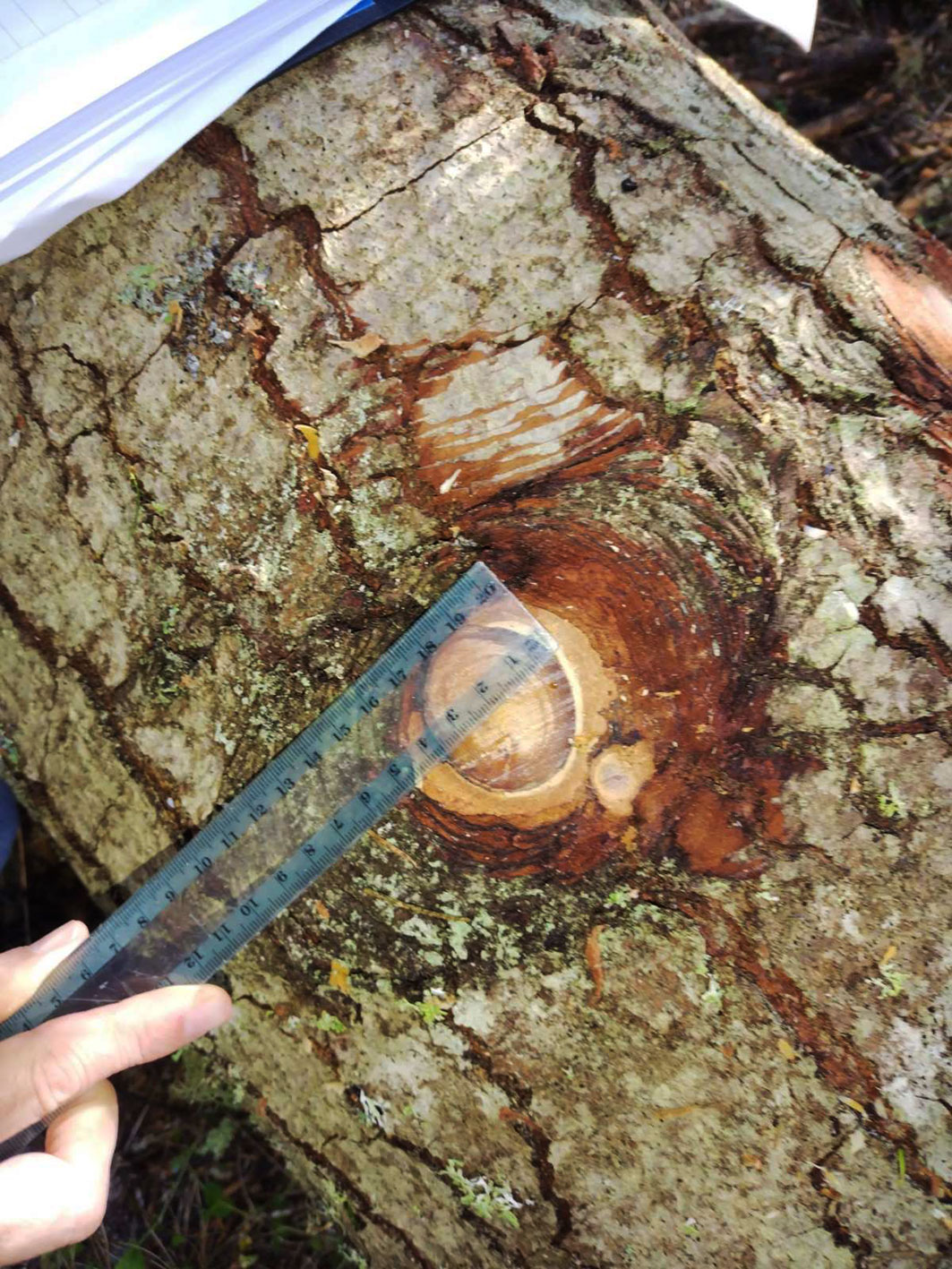
The presence and size of wood defects in the assortments were recorded. Defects were measured according to the national Yugoslav standard from 1969 (JUS D.A0.101 - Wood Defects: Terminology, Definitions, and Measurement - [19]). The formulas used for calculating the size of individual defects are presented in Tab. S1 in Supplementary material. Knots were classified according to the following criteria: mutual position (individual knots; knots in a whorl), degree of their tightness with the surrounding wood (tight or intergrown; partially intergrown; encased or loose knots), health status (sound; partially rotten; rotten), and size (pin knots: <6 mm; small knots: 7-20 mm; medium knots: 21-40 mm; large knots: >40 mm). A similar classification of knots can be found in Barszcz et al. ([5], [6]). We recorded the smallest diameter of individual knots, whereas for knots in a whorl, we used the smallest diameter of the largest knot (Fig. 3).
Fig. 3 - Measuring the knot size of Silver fir trunks using a ruler.
All statistical analyses were conducted using the software Statgraphics Centurion® XVII (Statgraphics Technologies, Inc., The Plains, VA, USA). After testing for data normality (Shapiro-Wilk W-test, p<0.05) and homogeneity of variance (Levene’s test, p<0.05), the Kruskal-Wallis non-parametric test was applied to analyze the influence of forest wood assortment and tree characteristics on the size of wood defects.
Results
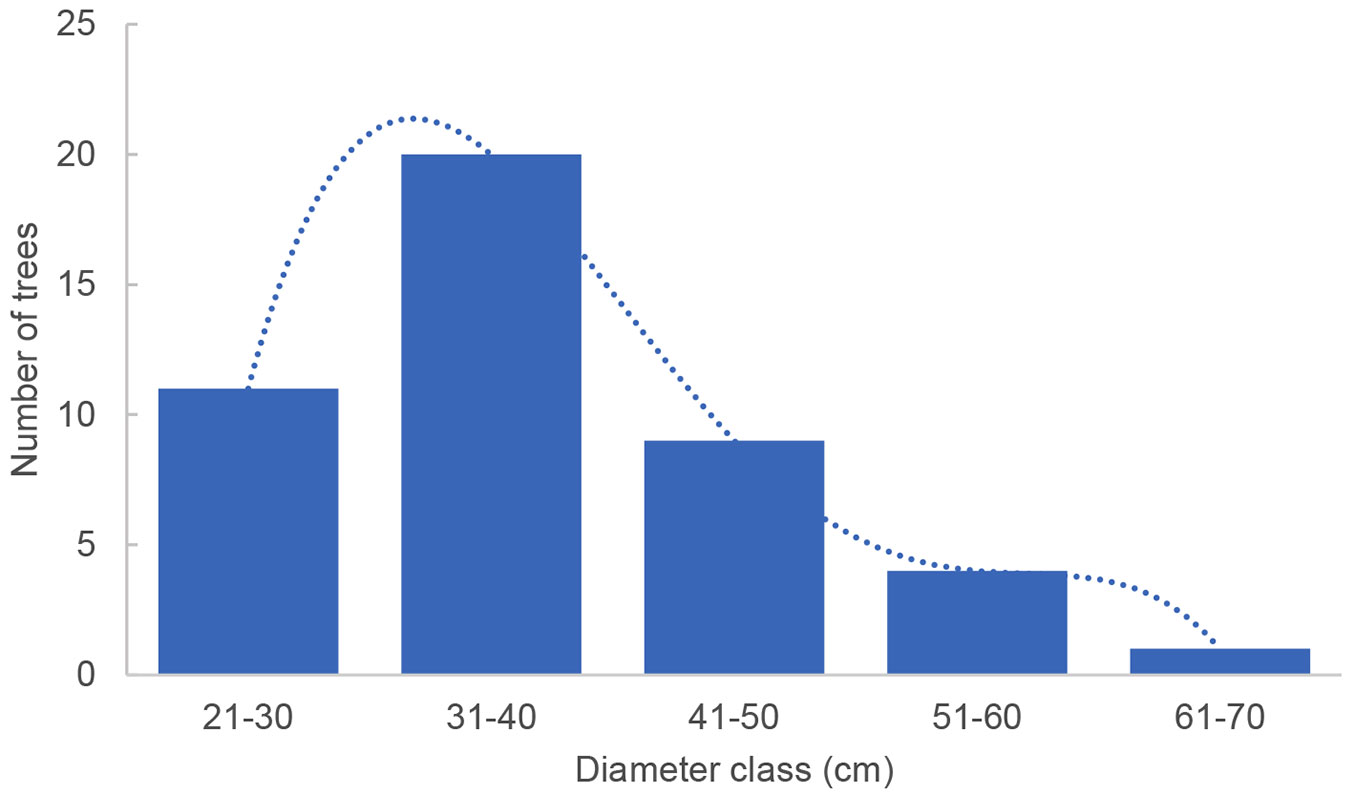
The average DBH of the 45 felled trees from two forest compartments was 40.20 ± 9.63 cm, with values ranging from 23 to 65 cm (Fig. 4). A total of 199 forest wood assortments were processed from the selected trees (Tab. 1).
Fig. 4 - Structure of analyzed trees by diameter classes.
Tab. 1 - Characteristics of processed wood assortments. (Dm): diameter of assortment at the middle of length; (D): diameter of assortment at the thicker end; (Dr): diameter of assortment at the root collar end; (d): diameter of assortment at the thinner end.
| Characteristics | N | Min | Mean | Max | SD |
|---|---|---|---|---|---|
| Number of assortments per tree | 45 | 2 | 4.42 | 6 | 0.99 |
| Volume of assortments per tree (m3) | 45 | 0.32 | 1.48 | 4.67 | 1.02 |
| Assortment length (m) | 199 | 1 | 6.02 | 10.06 | 1.72 |
| Dm (cm) | 199 | 10 | 27.88 | 65 | 10.80 |
| D (cm) | 154 | 11 | 28.24 | 59 | 9.57 |
| Dr (cm) | 45 | 24 | 39.96 | 72 | 10.81 |
| d (cm) | 199 | 8 | 24.34 | 59 | 11.17 |
| Volume of individual assortment (m3) | 199 | 0.03 | 0.34 | 1.83 | 0.31 |
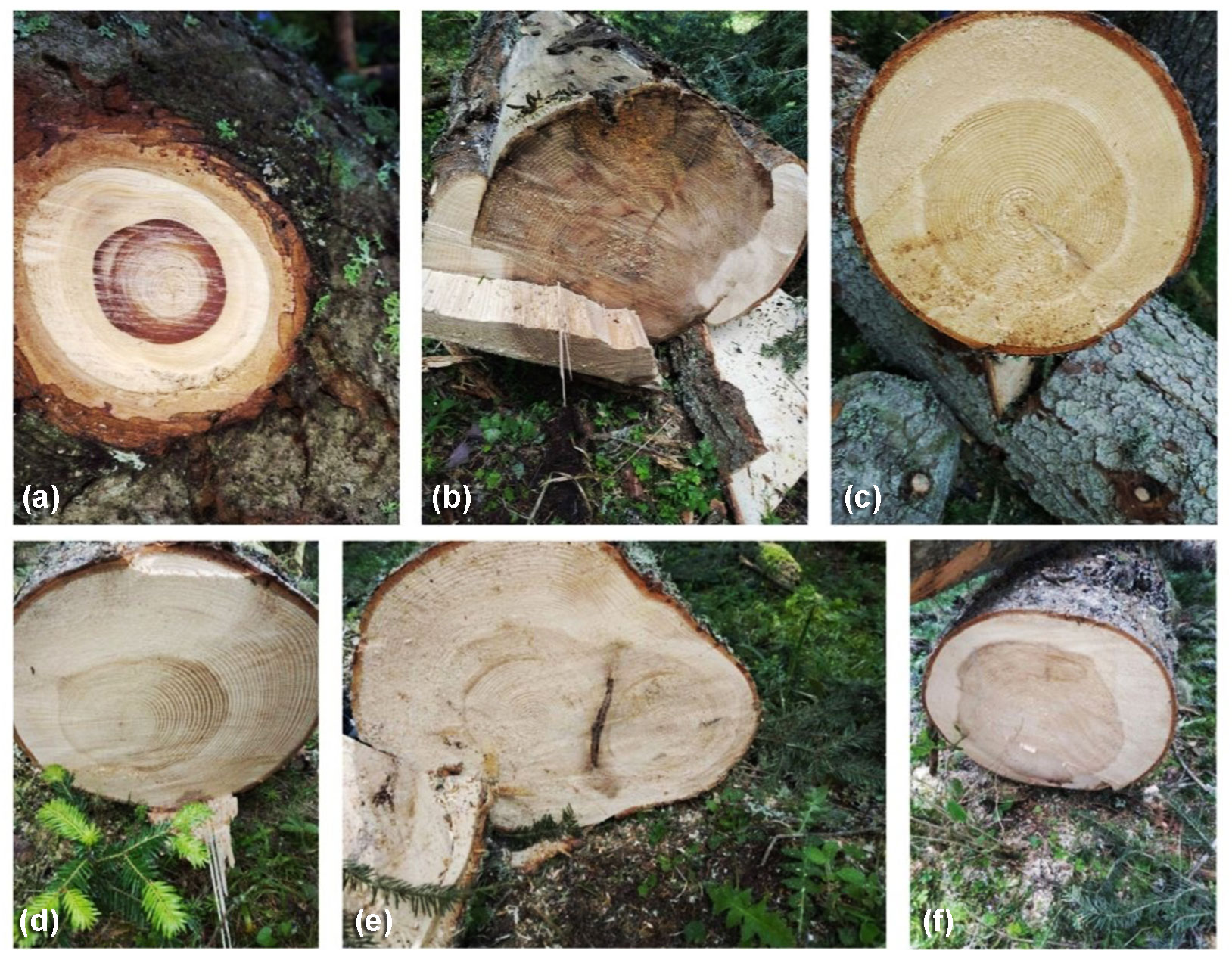
The analysis of the produced wood assortments revealed the following wood defects: double heart (Fig. 5e), pith eccentricity (Fig. 5d), ring shake, heart shake, curvature, split tree stem, compression wood (Fig. 5d), ingrown bark (Fig. 5e), wet heart (Fig. 5c), rot (Fig. 5b), brown stain, insect damages, scars, damage caused by physical and mechanical influences (Fig. 5b), knots (Fig. 5a), ellipticity (Fig. 5f), and taper.
Fig. 5 - Some of the recorded wood defects: knot (a); damage caused by mechanical influences and rot (b); wet heart (c), pith eccentricity and compression wood (d), double heart and ingrown bark (e); ellipticity (f).
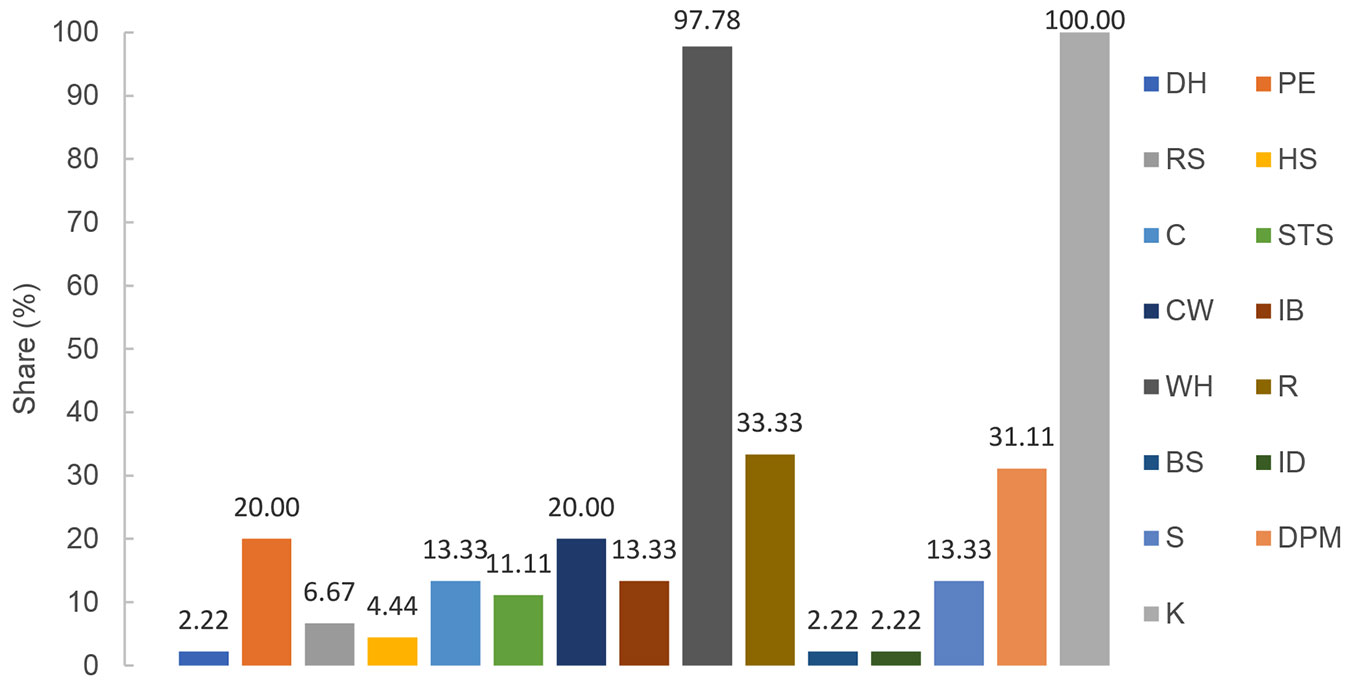
After knots, the most common defect was a wet heart, observed in 97.78% of the analyzed trees. Rot was recorded in 33.33% of the trees, while damage caused by physical and mechanical impacts was present in 31.11% of cases. Pith eccentricity and compression wood were found in 20% of the analyzed trees. Other wood defects (double heart, ring shake, heart shake, curvature, split tree stem, ingrown bark, brown stain, insect damage, and scars) were present in less than 20% of the analyzed trees (Fig. 6).
Fig. 6 - Proportion of wood defects in the analyzed trees. Double heart (DH); pith eccentricity (PE); ring shake (RS); heart shake (HS); curvature (C); split tree stem (STS); compression wood (CW); ingrown bark (IB); wet heart (WH); rot (R); brown stain (BS); insect damages (ID); scars (S); damages caused by physical and mechanical influences (DPM); knots (K).
We determined ellipticity and taper for each timber assortment. The highest average ellipticity was recorded at the end of the root collar (up to 1 m from the thicker end of the assortment), amounting to 3.62%, which is expected due to the irregular shape of the stem base. Taper ranged from 0.46% to 21.05%, with an average of 4.89%.
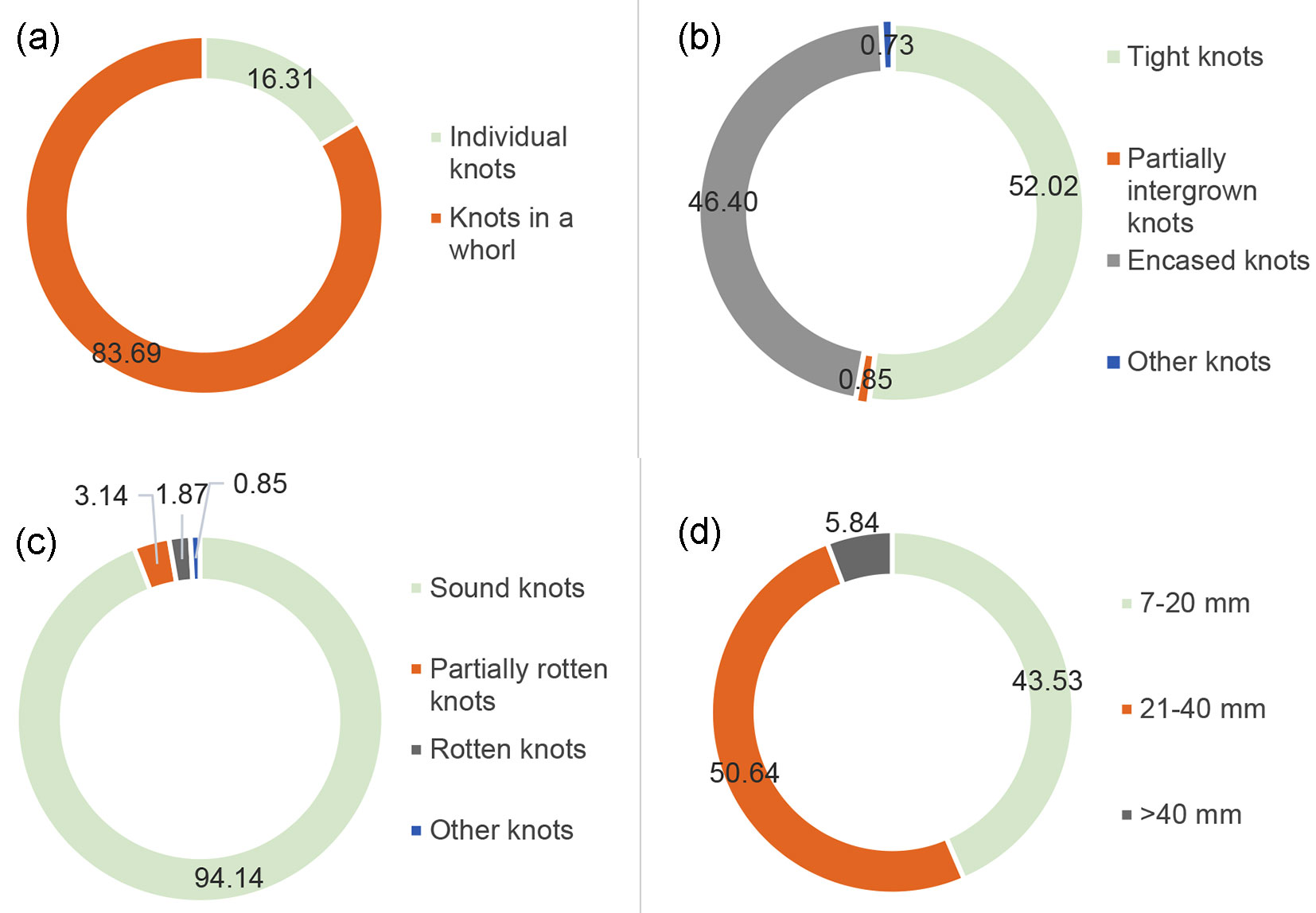
Knots were predominantly in whorls (83.69%), which is a consequence of the branch positions in coniferous wood (Fig. 7a). Tight knots (Fig. 7b) were more common (52.02%) compared to encased knots (46.40%). The share of partially intergrown knots, as well as combinations of certain types (tight/partially intergrown; tight/encased; partially intergrown/encased), is negligible (0.85%; 0.73%). Knots were mostly sound (94.14%). The proportion of partially rotten, rotten, and other categories of knots (sound/partially rotten; sound/rotten) was 5.86% (Fig. 7c). Notably, knots with a diameter smaller than 6 mm were not observed. Medium-sized knots (21-40 mm) and small knots (7-20 mm) were the most frequently found. Large knots (>40 mm) were relatively rare, comprising only 5.84% of the total (Fig. 7d). The average knot diameter was 23.95 mm (7-52 mm).
Fig. 7 - Distribution of knots by mutual position (a); degree of tightness with the surrounding wood (b); health status (c); size (d).
Wet heartwood was measured at both the thicker end and thinner end of the logs. The average proportion of wet heartwood was 63.06% at the thicker end and 57.44% at the thinner end. The extent of rot at the thicker end of the assortments averaged 53.21%, with a range from 1.22% to 89.36%. At the thinner end, the average extent of rot was slightly higher (54.09%), ranging from 13.57% to 85.37%.
The average scar size was 1088.07 cm2, with most scars (85.71%) observed on the first and second log assortments, moving upward from the base of the tree toward the crown. The average size of damage caused by physical and mechanical impacts was 989.69 cm2. The highest incidence of damage caused by physical and mechanical impacts was recorded in the lower part of the stem, specifically on the first assortment (66.67%).
Compression wood was found in 9.55% of forest wood assortments. Pith eccentricity varied from 4.88% to 28.57% at the thicker end and from 5.88% to 28.57% at the thinner end. The smaller number of defects recorded at the thinner end than at the thicker end supports the hypothesis that these defects disappear at a certain height of the tree.
We analyzed the relationship between wood defect size and the diameter of processed forest assortments, as well as their position along the stem, since these factors affect assortment quality ([12]). The analysis focused on defects, particularly wet heart and knots, that occurred more than 30 times in the assortments, which was considered the minimum sample size for statistical validity. Considering that ellipticity and taper were determined for each assortment, the influence of assortment characteristics on the size of these defects was also analyzed. The diameter at the middle length of the forest wood assortment was used. The position along the stem was defined by the assortment’s ordinal number (1-6), with assortment 1 corresponding to the lower part of the stem, closest to the ground. The average tree height at the thicker end of the produced assortments is presented in Tab. S2 in Supplementary material.
Significant differences were found in the size of taper, wet heart, and knots for different diameter classes of processed forest wood assortments (p< 0.0001), as well as for different assortment positions along the stem (p<0.0001 - Tab. 2, Tab. 3).
Tab. 2 - Dependence of wood defects on the diameter of forest wood assortments. Different letters indicate significant differences (p<0.05) among diameter classes, according to the Kruskal-Wallis test. (SD): Standard deviation.
| Diameter of wood assortment (cm) |
Ellipticity (%, ±SD) |
Taper (%, ±SD) |
Wet heart | Knots size (mm, ±SD) |
|
|---|---|---|---|---|---|
| Thicker end (%, ±SD) |
Thinner end (%, ±SD) |
||||
| 0-10 | 0 ± 0 | 4.73 ± 1.69 b | 0 ± 0 c | 0 ± 0 b | 17.82 ± 5.42 b |
| 11-20 | 2.52 ± 3.28 | 8.52 ± 3.30 a | 25.89 ± 30.80 bc | 11.03 ± 19.65 b | 24.19 ± 8.35 a |
| 21-30 | 2.77 ± 5.10 | 3.90 ± 1.86 b | 50.89 ± 23.75 ab | 35.53 ± 29.03 ab | 22.71 ± 8.62 a |
| 31-40 | 3.21 ± 5.69 | 3.05 ± 2.01 b | 56.67 ± 26.15 ab | 52.13 ± 25.65 a | 24.89 ± 11.72 a |
| 41-50 | 1.64 ± 1.92 | 3.10 ± 1.78 b | 50.77 ± 33.40 ab | 56.65 ± 29.41 a | 27.21 ± 11.97 a |
| 51-60 | 4.91 ± 5.34 | 2.26 ± 0.92 b | 71.01 ± 3.49 a | 65.77 ± 6.48 a | 24.57 ± 10.23 a |
| 61-70 | 3.03 | 4.40 b | 66.67 ab | 66.10 a | 15.00 ± 4.69 b |
| Total | 2.71 ± 4.53 | 4.89 ± 3.28 | 45.32 ± 30.12 | 35.21 ± 30.83 | 23.95 ± 9.63 |
| Kruskal-Wallis p-value | 0.6510 | <0.0001 | <0.0001 | <0.0001 | <0.0001 |
Tab. 3 - Dependence of wood defects on the assortment position along the stem. Different letters indicate significant differences (p<0.05) among positions, according to the Kruskal-Wallis test. (SD): Standard deviation.
| Position along the stem |
Ellipticity (%, ±SD) |
Taper (%, ±SD) |
Wet heart | Knots size (mm, ±SD) |
|
|---|---|---|---|---|---|
| Thicker end (%, ±SD) |
Thinner end (%, ±SD) |
||||
| 1 | 2.66 ± 3.36 | 3.18 ± 1.38 d | 52.39 ± 28.95 a | 54.59 ± 28.70 a | 14.81 ± 4.40 f |
| 2 | 3.69 ± 6.98 | 3.19 ± 2.58 d | 54.22 ± 28.47 a | 49.24 ± 28.40 a | 19.65 ± 7.96 e |
| 3 | 2.45 ± 4.13 | 4.36 ± 2.39 d | 49.88 ± 28.86 a | 33.12 ± 28.41 b | 24.35 ± 9.61 d |
| 4 | 2.16 ± 3.16 | 6.44 ± 2.54 c | 39.69 ± 27.08 a | 14.06 ± 22.65 c | 26.81 ± 8.88 c |
| 5 | 2.48 ± 3.09 | 8.85 ± 4.01 b | 21.89 ± 28.17 b | 15.27 ± 15.95 c | 29.00 ± 8.15 b |
| 6 | 1.97 ± 3.37 | 10.42 ± 3.70 a | 8.90 ± 15.34 b | 5.60 ± 9.57 c | 33.60 ± 8.45 a |
| Total | 2.71 ± 4.53 | 4.89 ± 3.28 | 45.32 ± 30.12 | 35.21 ± 30.83 | 23.95 ± 9.63 |
| Kruskal-Wallis p-value | 0.9431 | <0.0001 | <0.0001 | <0.0001 | <0.0001 |
The relationship between the size of wood defects and tree characteristics (DBH and position within the stand) was also analyzed (Tab. 4, Tab. 5). A significant difference was detected in the size of the wet heart at the thicker end of the stem across different tree positions within the stand (p=0.0178). Additionally, a significant difference in knot size was found in relation to both DBH and tree position within the stand (p<0.0001).
Tab. 4 - Dependence of wood defects on diameter at breast height (DBH). Different letters indicate significant differences (p<0.05) among DBH classes, according to the Kruskal-Wallis test. (SD): standard deviation.
| DBH (cm) | Ellipticity (%, ±SD) |
Taper (%, ±SD) |
Wet heart | Knots size (mm, ±SD) |
|
|---|---|---|---|---|---|
| Thicker end (%, ±SD) |
Thinner end (%, ±SD) |
||||
| 21-30 | 2.93 ± 4.46 | 4.74 ± 2.61 | 65.44 ± 11.49 | 62.59 ± 16.18 | 16.90 ± 4.83 c |
| 31-50 | 2.62 ± 4.79 | 4.94 ± 3.38 | 62.69 ± 11.53 | 56.45 ± 16.60 | 23.60 ± 8.62 b |
| 51-80 | 2.87 ± 3.17 | 4.82 ± 3.64 | 62.40 ± 12.98 | 58.18 ± 15.50 | 32.90 ± 10.67 a |
| Total | 2.71 ± 4.53 | 4.89 ± 3.28 | 63.06 ± 11.74 | 57.44 ± 16.36 | 23.95 ± 9.63 |
| Kruskal-Wallis p-value | 0.3376 | 0.8311 | 0.6344 | 0.2894 | <0.0001 |
Tab. 5 - Dependence of wood defects on position within the stand. Different letters indicate significant differences (p<0.05) among positions within the stand, according to the Kruskal-Wallis test. (SD): Standard deviation.
| Position within the stand |
Ellipticity (%, ±SD) |
Taper (%, ±SD) |
Wet heart | Knots size (mm, ±SD) |
|
|---|---|---|---|---|---|
| Thicker end (%, ±SD) |
Thinner end (%, ±SD) |
||||
| Predominant | 2.89 ± 4.24 | 4.89 ± 3.37 | 62.99 ± 9.84 ab | 56.78 ± 15.42 | 32.74 ± 10.47 a |
| Dominantn | 2.48 ± 3.25 | 4.73 ± 3.41 | 63.29 ± 12.44 ab | 57.71 ± 16.50 | 25.10 ± 9.69 b |
| Co-dominant | 2.88 ± 6.47 | 5.40 ± 3.24 | 59.40 ± 9.03 b | 54.03 ± 15.31 | 19.73 ± 6.09 c |
| Suppressed | 3.81 ± 6.08 | 4.59 ± 2.18 | 70.88 ± 10.46 a | 66.12 ± 18.73 | 16.13 ± 4.70 d |
| Overtopped | 0 ± 0 | 0 ± 0 | 0 ± 0 | 0 ± 0 | 0 ± 0 |
| Total | 2.71 ± 4.53 | 4.88 ± 3.28 | 63.06 ± 11.74 | 57.44 ± 16.36 | 23.95 ± 9.63 |
| Kruskal-Wallis p-value | 0.4158 | 0.3800 | 0.0178 | 0.1447 | <0.0001 |
Discussion
Our study revealed that knots were the most frequent wood defect in silver fir trees, consistent with findings from previous studies in softwood stands ([36], [37], [1]). The share of trees with recorded rot in this study was lower than the that (63%) reported by Chomicz-Zegar et al. ([13]) for silver fir plus trees (mother trees) in mountainous forest districts of Poland, likely because their study focused exclusively on older trees, aged 91 to 158 years. The proportion of bark-injured trees exhibiting rot was higher than the 27% reported by Kohnle & Kändler ([21]) in experimental plots in southwestern Germany. Regarding wet heart, comparable findings were reported by Martin et al. ([24]), who detected wet heart in 90% of the examined silver fir trees, despite their healthy appearance and absence of visible external damage. The high incidence of this defect found in this study is consistent with the findings by Torelli et al. ([39]), who identified wet heart as one of the most critical wood defects in silver fir. Its presence substantially decreases the commercial value of silver fir logs ([44]). Ring shake is often recognized as a significant defect in silver fir wood, especially when considered alongside wet heart, which together contribute to its reduced value compared to spruce ([32], [28], [39], [14]). However, in this study ring shake was found in only 6.67% of the analyzed trees and in 2.01% of the processed forest wood assortments.
Pozega ([30]) reported the following wood defects in a study on the assortment structure of silver fir stands: knots, heart shake, ring shake, pith eccentricity, and rot. The most frequently observed defects were knots, followed by rot. In contrast, the present study recorded a higher proportion of trees affected by wet heart than by rot.
According to the national JUS standard, a cross-section is considered regular when the ellipticity is less than 10%. Analysis of ellipticity measured at the middle of the forest wood assortment length showed that only 3.52% of the assortments exceed this value. The ellipticity was measured at the middle of the length because, in practice, the diameter of a forest wood assortment is usually measured at this point.
Knot size plays a critical role, as it is a limiting factor in classifying processed forest wood assortments ([37]). The average knot diameter in this study was 23.95 mm (range: 7-52 mm ), which is similar to the average knot size of 20.3 mm found by Barszcz et al. ([5]) in 150-year-old Norway spruce (Picea abies Karst.) in stands situated at an altitude of 1450-1740 m a.s.l. in the Dolomites (Italian Alps).
The highest incidence of scars and damage caused by physical and mechanical impacts was recorded in the lower part of the stem, specifically in the first and second wood assortments, which further supports the well-established fact that the lower stem section is the most susceptible to injuries during timber extraction using cable skidders, which prevail in forest harvesting in Bosnia and Herzegovina. The recorded damaged area slightly exceeds the 790.51 cm2 reported by Treštić et al. ([40]) for silver fir trees growing in a site located in close proximity to the investigated forest compartment.
Tree injuries provide optimal entry points for wood-degrading microorganisms, causing wood decay and decreasing wood quality. Treštić et al. ([40]) investigated the occurrence of rot in silver fir trees damaged during forest harvesting operations in Bosnia and Herzegovina and found a significant correlation between rot development and both injury size and its position on the stem. Indeed, in this study, injuries were observed in 80% of trees with recorded rot.
The results show significant differences in taper size, wet heart, and knots among different diameter classes of processed forest wood assortments, as well as among different positions along the stem. The highest taper values were recorded in assortments with diameters of 11-20 cm, while the lowest were observed in the 51-60 cm diameter class. When analyzing taper along the stem, a gradual increase was evident from the stem base toward the crown, consistent with the well-established pattern of decreasing stem diameter toward the upper portions of the tree ([35]). Notably, the most pronounced taper occurred in assortments with smaller diameters (11-20 cm), predominantly in the upper stem sections. The magnitude of the wet heart defect generally increased with increasing assortment diameter, except in the 61-70 cm diameter class. In contrast, wet heart size decreased progressively from the base of the trunk toward the crown. These trends are consistent with Torelli et al. ([38]), indicating that the frequency and intensity of wet heart formation in silver fir increase with tree dimensions. We found the smallest knot sizes in assortments with diameters of 61-70 cm, originating from the lower part of the stem; this is consistent with the findings of Sušnjar et al. ([37]), who noted that only the lower parts of silver fir stems are suitable for veneer log processing.
Our results show significant differences in wet heart size at the thicker end of the stem across different tree positions within the stand. Also, a significant difference in knot size was found in relation to both DBH and tree position within the stand. The largest wet heart size at the thicker end was recorded in suppressed trees. The largest knots were observed in trees belonging to the 51-80 cm DBH class and those classified as predominant trees. A trend of increasing knot size from the 21- 30 cm diameter class to the 51- 80 cm diameter class supports a statement reported by Côté ([16]) that branch diameter increases as stem diameter increases.
To complement manual measurements in the field, wood defects can also be predicted using the information collected automatically by the harvester ([42]). Indirect technologies can detect and estimate wood defects, such as an acoustic tool assembled in the harvester head ([45]) or information interpreted from image analyses ([42], [26]). Further, a camera system can be installed on a harvester head to detect variable information from the log end face, including annual ring width, the boundary between sapwood and heartwood, pith eccentricity, and the presence of rot ([26]). To improve mechanical felling and processing, ongoing intensive research focuses on developing models for automated detection and measurement of wood defects using a harvester head. Mäkinen et al. ([26]) developed a model system to predict the horizontal diameter of the thickest knot for each whorl along a Scots pine stem. The study results showed that the knottiness of stems of a given size may vary greatly depending on their early growth rate. In the study conducted by Raatevaara et al. ([31]), the applicability of electrical impedance spectroscopy and image analysis of a log end face for pine heartwood measurements from the harvesting perspective was evaluated. The results indicated that both methods can measure heartwood in processed stems, with an average heartwood diameter error of less than two centimeters for both methods.
Conclusions
Wood defects in silver fir were assessed in accordance with the Yugoslav (JUS) standard, which is still applied in Bosnia and Herzegovina, noting that there are no substantial differences between this standard and European standards regarding wood defect measurement procedures. The effects of diameter and position along the stem of forest wood assortments, as well as DBH and tree position within the stand, on the size of the most prevalent wood defects were also analyzed. The results showed that smaller wood defects that substantially affect the quality of forest wood assortments, primarily knots and taper, were generally observed in the lower sections of the stem. The only notable exception is the wet heart defect, whose size tends to decrease from the base of the stem toward the crown. The correlation between tree damage and rot occurrence was confirmed. In 80% of trees exhibiting rot, physical-mechanical damage or scars were also present, highlightning the need to enhance protective measures against mechanical damage during forest harvesting operations. Harvesters are also increasingly common in uneven-aged mixed stands in Bosnia and Herzegovina. In such cases, processing felled trees into wood assortments requires detailed knowledge of the morphology of specific tree species, as well as the occurrence and size of the most common wood defects. The wood defect properties presented in this study could be used as part of a database essential for developing models that support logging operations and enable more profitable bucking decisions during mechanical felling and processing.
To enable a more comprehensive evaluation, future studies may incorporate additional tree and stand properties. Further research is crucial to expand the wood defect database and create reliable models that can be integrated into modern harvesting technologies.
References
Gscholar
Gscholar
Gscholar
Gscholar
Gscholar
Gscholar
Gscholar
Gscholar
Gscholar
Gscholar
Gscholar
Gscholar
Gscholar
Gscholar
Gscholar
Gscholar
Gscholar
Gscholar
Gscholar
Gscholar
Gscholar
Gscholar

Authors’ Info
Authors’ Affiliation
Jusuf Musić 0000-0003-2408-3077
Velid Halilović 0000-0003-4007-121x
Ehlimana Pamić 0009-0009-0803-9130
Amina Karišik 0009-0008-3197-3055
University of Sarajevo, Faculty of Forestry, Zagrebačka 20, Sarajevo (Bosnia and Herzegovina)
Wald-Project Ltd., Ustikolina n.n., Bosanska Krupa (Bosnia and Herzegovina)
Corresponding author
Paper Info
Citation
Knežević J, Musić J, Halilović V, Comaga A, Pamić E, Karišik A (2026). Wood defects in Silver fir (Abies alba Mill.) from mixed uneven-aged forest stands. iForest 19: 321-328. - doi: 10.3832/ifor4950-019
Academic Editor
Luigi Todaro
Paper history
Received: Jul 25, 2025
Accepted: Mar 17, 2026
First online: Aug 24, 2026
Publication Date: Aug 31, 2026
Publication Time: 5.33 months
Copyright Information
© SISEF - The Italian Society of Silviculture and Forest Ecology 2026
Open Access
This article is distributed under the terms of the Creative Commons Attribution-Non Commercial 4.0 International (https://creativecommons.org/licenses/by-nc/4.0/), which permits unrestricted use, distribution, and reproduction in any medium, provided you give appropriate credit to the original author(s) and the source, provide a link to the Creative Commons license, and indicate if changes were made.

Web Metrics
Breakdown by View Type
Article Usage
Total Article Views: 1176
(from publication date up to now)
Breakdown by View Type
HTML Page Views: 335
Abstract Page Views: 437
PDF Downloads: 335
Citation/Reference Downloads: 3
XML Downloads: 66
Web Metrics
Days since publication: 46
Overall contacts: 1176
Avg. contacts per week: 178.96
Article Citations
Article citations are based on data periodically collected from the Clarivate Web of Science web site
(last update: Jul 2026)
(No citations were found up to date. Please come back later)
Publication Metrics
by Dimensions ©
Articles citing this article
List of the papers citing this article based on CrossRef Cited-by.
Related Contents
iForest Similar Articles
Research Articles
Physical and mechanical characteristics of poor-quality wood after heat treatment
vol. 8, pp. 884-891 (online: 22 May 2015)
Research Articles
Physical, chemical and mechanical properties of Pinus sylvestris wood at five sites in Portugal
vol. 10, pp. 669-679 (online: 11 July 2017)
Research Articles
NIR-based models for estimating selected physical and chemical wood properties from fast-growing plantations
vol. 15, pp. 372-380 (online: 05 October 2022)
Research Articles
Density, extractives and decay resistance variabilities within branch wood from four agroforestry hardwood species
vol. 14, pp. 212-220 (online: 02 May 2021)
Research Articles
Identification of wood from the Amazon by characteristics of Haralick and Neural Network: image segmentation and polishing of the surface
vol. 15, pp. 234-239 (online: 14 July 2022)
Research Articles
Characterization of VOC emission profile of different wood species during moisture cycles
vol. 10, pp. 576-584 (online: 08 May 2017)
Research Articles
Acoustic evaluation of wood quality with a non-destructive method in standing trees: a first survey in Italy
vol. 10, pp. 700-706 (online: 17 July 2017)
Research Articles
Examining the evolution and convergence of wood modification and environmental impact assessment in research
vol. 10, pp. 879-885 (online: 06 November 2017)
Research Articles
Mechanical and physical properties of Cunninghamia lanceolata wood decayed by brown rot
vol. 12, pp. 317-322 (online: 06 June 2019)
Research Articles
The potential of using xylarium wood samples for wood density calculations: a comparison of approaches for volume measurement
vol. 4, pp. 150-159 (online: 11 August 2011)
iForest Database Search
Search By Author
Search By Keyword
Google Scholar Search
Citing Articles
Search By Author
Search By Keywords
PubMed Search
Search By Author
Search By Keyword