
Digitalization challenges in operational forestry: evidence from a stakeholder survey in Italy
iForest - Biogeosciences and Forestry, Volume 19, Issue 4, Pages 303-310 (2026)
doi: https://doi.org/10.3832/ifor5233-019
Published: Aug 04, 2026 - Copyright © 2026 SISEF
Research Articles
Abstract
Digitalization is increasingly recognized as a major driver of innovation in the forestry sector. However, the adoption of digital technologies remains uneven, particularly in structurally fragmented forestry systems such as those found in Southern Europe. This study aims to analyze and discuss stakeholders’ expectations, perceived barriers, and opportunities related to the adoption of digital technologies in Italian operational forestry, based on a participatory process that included a webinar, an online questionnaire, and a focus group, engaging a broad range of forestry stakeholders. Because the survey relied on a voluntary, non-probability sample, the findings should be interpreted as reflecting the perceptions and priorities of the surveyed stakeholders rather than as statistically representative estimates of the entire Italian forestry sector. The results reveal a growing interest in digital technologies across all operational domains, particularly in GIS-based decision support systems, remote sensing, product traceability, and precision harvesting. Nevertheless, stakeholders identified several persistent barriers, including high investment costs, limited interoperability among systems, insufficient digital skills, and weak connectivity in rural and mountainous areas. Training emerged as the most critical enabling factor, often considered even more important than direct investment in technologies. Overall, the evidence suggests that digitalization cannot advance without systematic investment in human capital, interoperability, and shared information infrastructures. Tools such as knowledge hubs, communities of practice, and targeted training programs may play a key role in bridging the gap between technological availability and operational implementation. Although rooted in the Italian context, the insights provided by this study offer relevant indications for digitalization policies and practices across Southern European countries and in forestry systems characterized by fragmented ownership structures and heterogeneous operational conditions.
Keywords
Information and Communication Technologies, Precision Forestry, Questionnaire Survey, Forest Management, Focus Group
Introduction
The increasing availability of information and communication technologies (ICTs), together with advances in remote sensing, geographic information systems (GIS), satellite positioning networks, mobile sensors, decision support systems (DSS), collaborative platforms, advanced analytics tools, and mechatronics, is reshaping operational forestry worldwide ([13]). In this context, the concept of precision forestry (PF) has gained increasing attention as an approach aimed at improving the efficiency, sustainability, and traceability of forest management activities through the integration of digital technologies ([8]). In this study, digitalization refers to the integration of digital technologies, data-driven processes, and interconnected information systems into forestry operations and decision-making processes. Within this broader framework, PF represents the operational application of these technologies to improve the efficiency, sustainability, traceability, and safety of forest management activities.
The wide range of available ICTs is reflected in the diversity of their application domains within the operational forestry sector, each characterized by specific features and distinct digitalization potential (Tab. 1). Precision forestry supports conventional forest management by enabling more accurate planning, real-time monitoring, improved operational safety, reduced environmental impacts, and more efficient supply-chain management. The rapid expansion of digital tools has enabled a wide range of applications across the forestry sector, including forest inventories, harvesting operations, logistics, certification systems, urban forestry, and environmental monitoring.
Tab. 1 - Digital technologies for forestry.
| Technological domain | Main technologies | Operational functions | Application examples |
|---|---|---|---|
| Geospatial data (remote and proximal sensing) | Satellites, multispectral and hyperspectral sensors, LiDAR, photogrammetry, TLS | Mapping, monitoring, yield estimation, change detection, disturbance assessment | Forest inventories, early warning systems, post-event assessments |
| Spatial positioning and mobility | GNSS, RTK, rovers, mobile apps, digital tree marking | Precise georeferencing, machine tracking, field surveys | Tree marking, parcel boundary delineation, logistics |
| Data management and analysis | DBMS, cloud platforms, ML/AI models, simulation, forest modeling | Data organization, forecasting, classification, scenario analysis | Silvicultural planning, risk analysis |
| Mapping and decision processes | GIS software, WebGIS platforms, operational DSS | Spatial analysis, data sharing, digital workflows | Planning, authorizations, diagnostics |
| Precision harvesting | Machine sensors, telemetry, IoT, prescription maps | Worksite optimization, safety enhancement, impact reduction, wood quality optimization | Extraction routes, tree bucking, production monitoring |
| Forest certification and product traceability | RFID, QR codes, blockchain, QMS systems | Batch tracking, auditing, process standardization | Production and marketing supply chains, PEFC/FSC certification |
Despite these opportunities, the adoption of digital technologies in forestry remains uneven across countries and regions. In many cases, implementation is constrained by structural and socio-economic factors, including fragmented forest ownership, complex terrain conditions, limited infrastructure, small enterprise size, and restricted investment capacity ([20]). These constraints are particularly evident in Southern European countries (e.g., [1], [3]) and differ markedly from those observed in Northern European and North American countries, where PF has reached more advanced levels of implementation.
Italy represents a particularly relevant case study in this regard. Compared with Northern European and North American contexts, the Italian forestry sector is characterized by fragmented ownership, limited mechanization, and a prevalence of small and medium enterprises. Consequently, digitalization cannot simply rely on the direct transfer of technological models developed in large-scale industrial forestry systems. Instead, it requires scalable, context-specific solutions tailored to the operational and organizational characteristics of Alpine and Mediterranean forestry.
This study aims to analyze and discuss the expectations, perceived barriers, and opportunities related to digitalization in the Italian operational forestry sector, drawing directly on stakeholders’ perspectives. Specifically, the analysis is based on a participatory process involving a webinar, an online questionnaire, and a focus group to identify priority areas for investment in technologies, training, interoperability, and the development of shared information infrastructures, to support a genuinely inclusive and effective digital transition in forestry.
Materials and methods
Study design
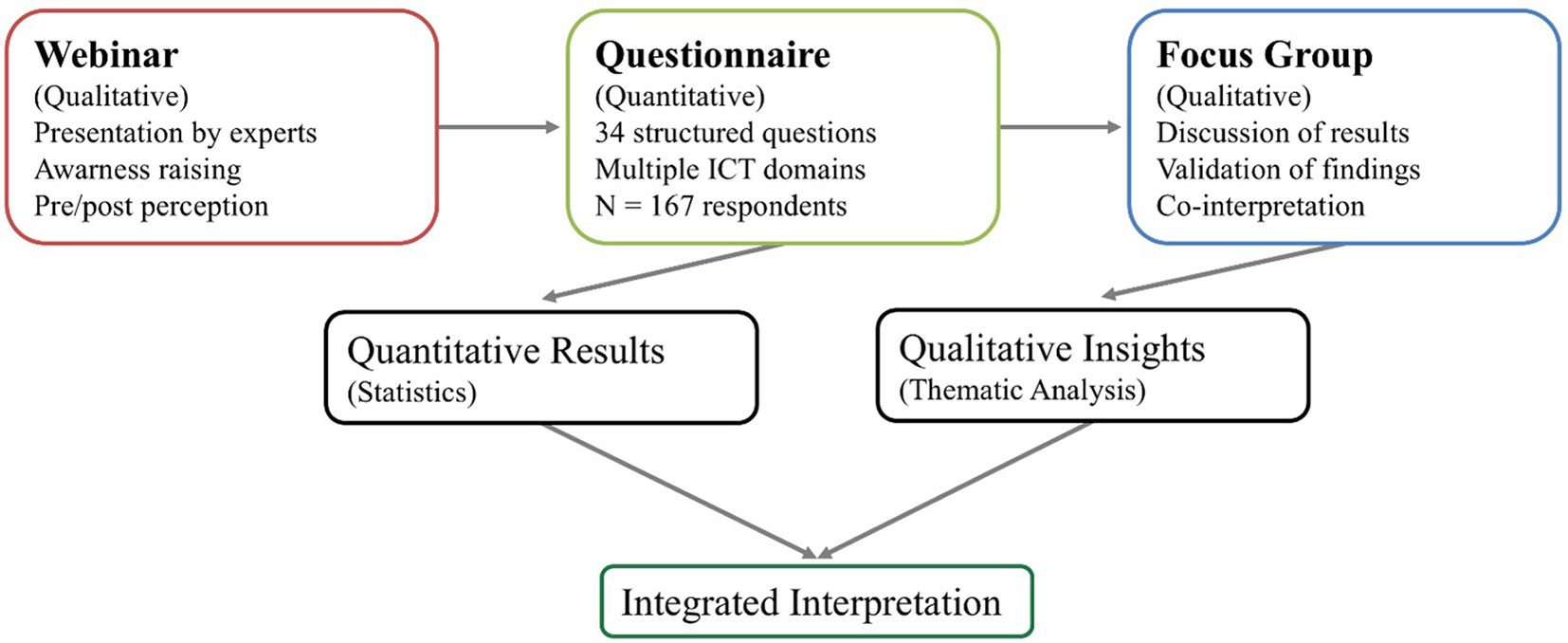
The study adopted a participatory approach to investigate the current state of digitalization in the Italian operational forestry sector. The methodological framework combined three complementary phases: (i) a preliminary webinar, (ii) an online questionnaire, and (iii) a final focus group (Fig. 1). This structure was designed to collect both quantitative and qualitative information while also encouraging stakeholder engagement and discussion to highlight perceptions, critical issues, and expectations.
Fig. 1 - Flow chart of the survey process.
Preliminary webinar
The webinar, held on June 11, 2025, was organized with a dual objective: to present the survey and to raise awareness among stakeholders about the topic and the dedicated questionnaire developed for this study.
To maximize participation, the webinar was divided into two sessions: an afternoon session primarily for technicians and public officials engaged in office-based activities, and an evening session for forestry operators and professionals more directly involved in field activities. The event was promoted through online communication channels dedicated to the Italian forestry sector. Participation was high, with more than 120 attendees in the afternoon session and over 100 in the evening session. The one-hour programme included five presentations delivered by researchers, private companies, and certification bodies. These focused on practical applications of precision forestry technologies in forest planning, monitoring, harvesting operations, resource management, and product traceability. In addition to introducing the questionnaire, the webinar aimed to improve participants’ awareness of current digitalization opportunities in forestry.
To evaluate changes in perception, participants were asked at the beginning of the webinar to assess the level of digital integration within their organizations. The same question was repeated at the end of the event.
Online questionnaire
The questionnaire was distributed to webinar participants and further disseminated through an online communication campaign on Italian forestry-related Internet channels to reach additional stakeholders who had not attended the event but were interested in the topic. Consequently, the final sample (167 responses) included both webinar participants and stakeholders reached through the broader dissemination campaign. Therefore, the responses are drawn from a voluntary, non-probability sample, which is consistent with the study’s exploratory and interpretative objectives.
The semi-structured questionnaire was developed by the authors based on a literature review and their professional experience. It included 34 questions, 10 of which were closed-ended (see Appendix 1 in Supplementary Material). The first section collected general information about respondents, including organization type, geographic location, professional role, and main operational activities.
The core section of the questionnaire focused around five digital technology areas considered strategic for the operational forestry sector in Italy ([8], [2]): remote and proximal sensing (e.g., UAV drones, TLS, LiDAR); geographic information systems (GIS) and decision support systems (DSS) for silvicultural operations; ICT tools for urban forestry; precision harvesting; forest management and product traceability certification. For each domain, a recurring set of questions was designed to capture complementary dimensions of digitalization within the respondent’s specific operational context, including level of familiarity with the technologies; perceived usefulness of specialized training; realistic time horizon for potential investment; level of financial resources considered sustainable for the acquisition or implementation of technologies; and willingness to allocate resources to training and skills development.
The final section investigated the main barriers to digitalization, including investment costs, lack of technical skills, interoperability limitations, and insufficient connectivity. Respondents were also asked to identify the most effective instruments for promoting the uptake of innovation, such as financial incentives, collaborative platforms, technical support services, and structured training programs.
Final focus group
The participatory process concluded with an in-person focus group held on October 16, 2025. The event involved 66 participants representing different stakeholder categories within the forestry sector.
The focus group had two main objectives: (i) to discuss and validate the preliminary questionnaire results, and (ii) to identify strategic priorities for future digitalization policies and practices.
The session lasted approximately four hours and was organized around the five technological domains investigated in the questionnaire. After an initial presentation of the survey results, participants discussed the main barriers, opportunities, and future perspectives related to forestry digitalization.
The discussion was audio-recorded, fully transcribed, and analyzed through thematic content analysis following the approach proposed by Nyumba et al. ([17]). The coding process was conducted independently by two members of the research team. Emerging themes were subsequently compared and discussed, and any differences in interpretation were resolved through consensus. The analysis focused on recurring themes directly related to the study objectives, including training needs, investment barriers, interoperability, organizational fragmentation, and enabling conditions for digital transition.
The focus group provided important qualitative insights that complemented and expanded the questionnaire findings, allowing a more comprehensive interpretation of stakeholders’ perceptions and priorities.
Results
Webinar
The comparison between participants’ evaluations of digital integration within their organizations before and after the webinar revealed a significant shift in perception (Fig. 2). Initial responses generally reflected an optimistic assessment of the level of digitalization achieved within the sector. However, after the presentations and discussions, participants tended to provide more cautious evaluations.
Fig. 2 - Comparison between responses regarding the level of digital integration within participants’ organizations, collected at the beginning and at the end of the webinar.
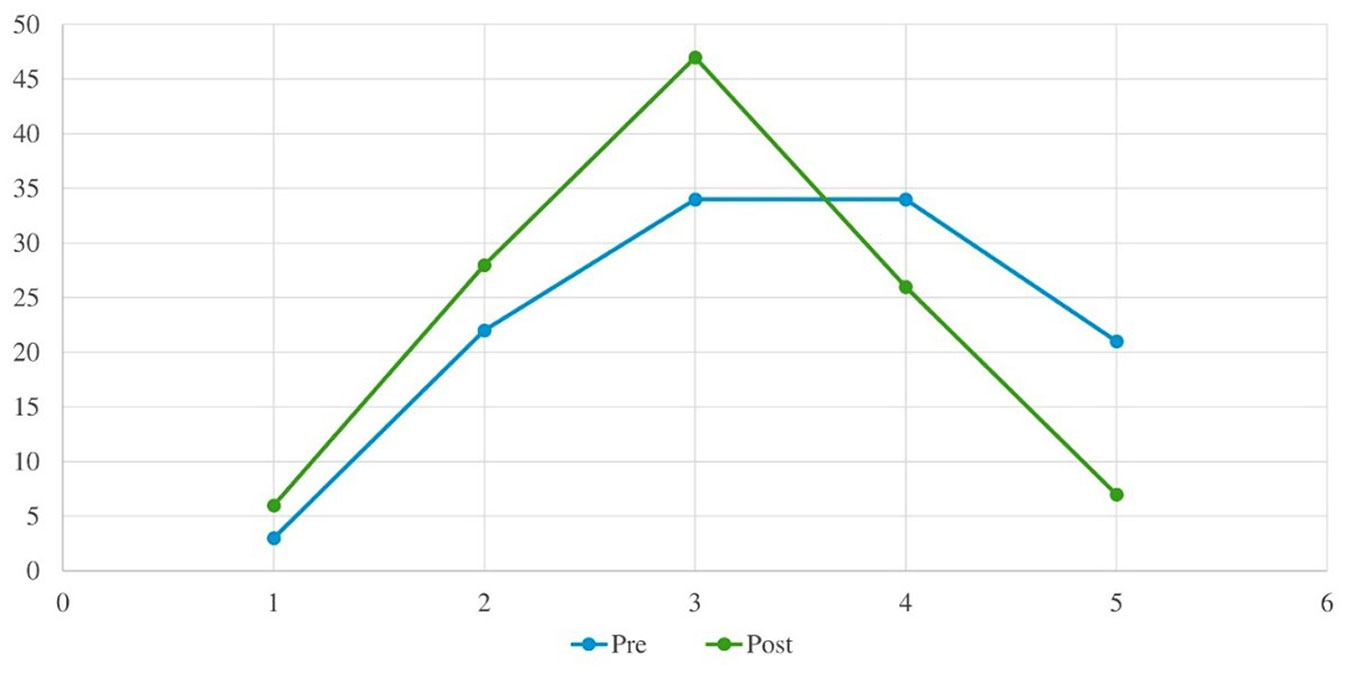
To assess whether the difference between pre- and post-webinar scores was statistically significant, a Wilcoxon signed-rank test for paired samples was conducted. The analysis yielded a p-value of 6.095 × 10⁻⁵ (< 0.05), indicating a statistically significant difference between the pre- and post-webinar scores. The effect size, calculated using Cohen’s r, was 0.382, suggesting a moderate magnitude of change.
Among respondents who modified their evaluations, nearly three-quarters lowered their scores after the webinar. This result suggests that although awareness of digital innovation is relatively widespread in the Italian forestry sector, stakeholders may initially overestimate the level of technological integration in their organizations. Exposure to concrete examples and operational case studies appeared to encourage a more realistic assessment of the current state of digitalization.
Questionnaire
Sample characterization
A total of 167 stakeholders participated in the questionnaire survey, representing the main components of the Italian forestry sector, including entrepreneurs, independent professionals, researchers, public officials, technicians, private companies, and third-sector organizations.
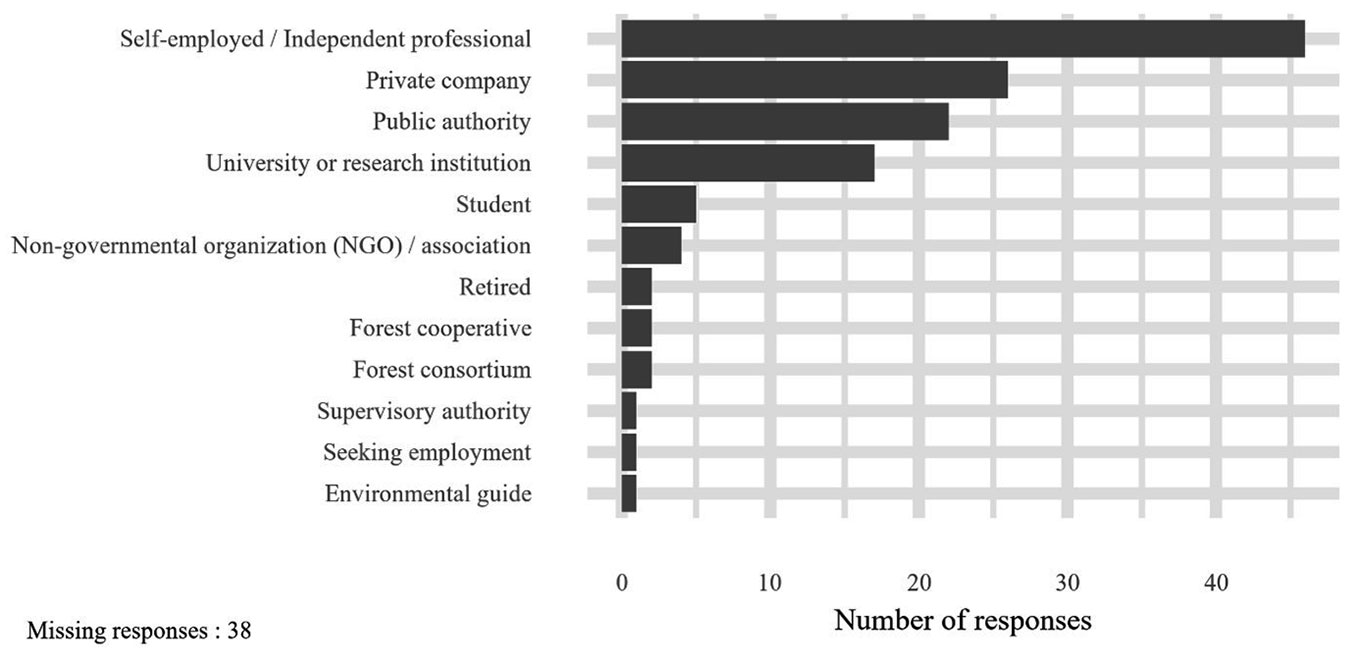
The distribution of respondents by organization type (Fig. 3) reflects the structure of the Italian forestry system, which is characterized by a strong presence of micro-enterprises and self-employed professionals. Independent professionals and technicians from private companies represented the largest groups, followed by public-sector technicians and researchers. Private forest owners were less represented.
Fig. 3 - Distribution of respondents by organization of affiliation.
The sample provided broad territorial coverage across Italy, although participation was slightly higher in Northern and Central regions, where forestry activities are generally more economically structured and technologically developed. Stakeholders operating at national and international levels were also represented.
Organizational size is similarly varied: alongside a significant share of independent professionals, the sample includes very small organizations (fewer than 10 employees), typical of the operational forestry sector, as well as more complex, structured entities with 20 to 100 employees.
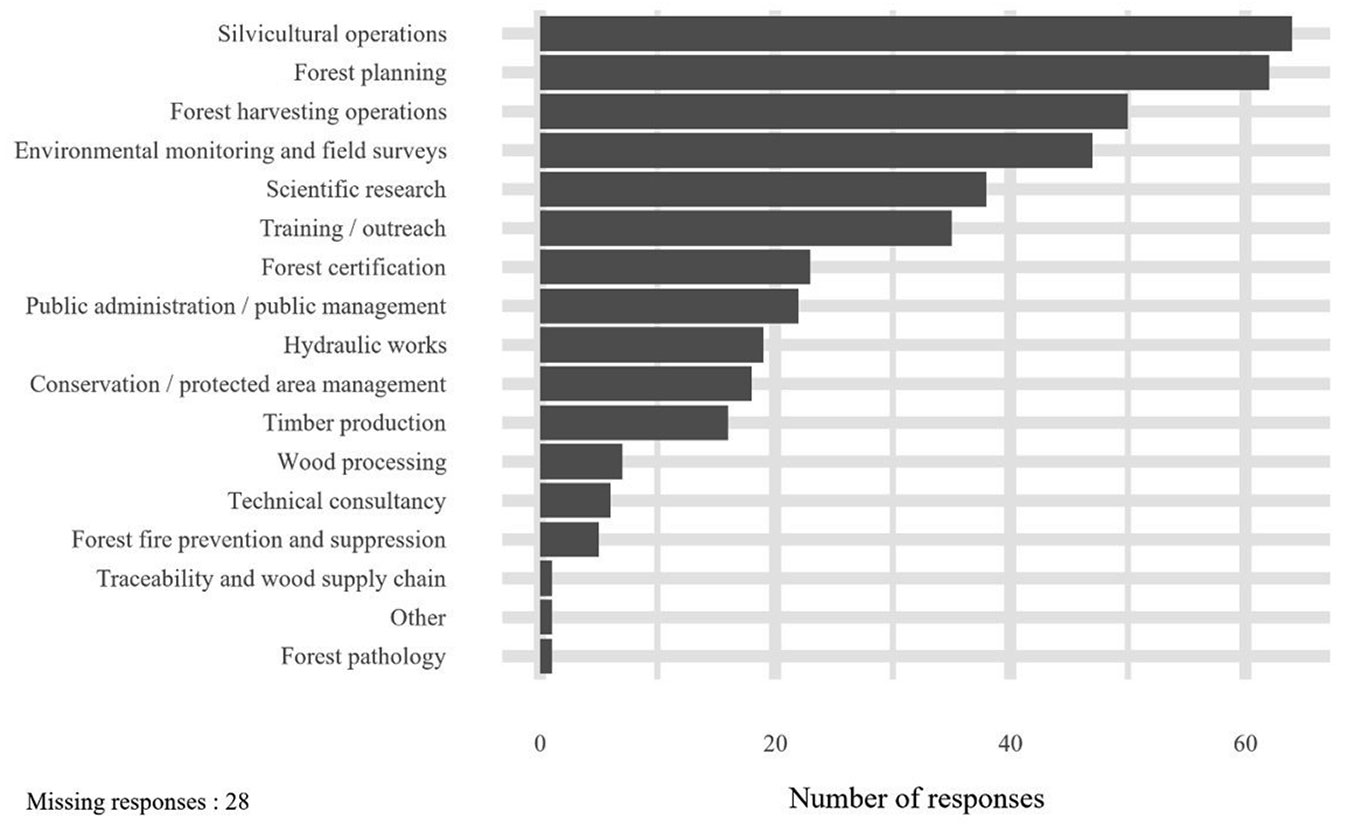
Respondents reported involvement in a wide range of forestry activities (Fig. 4), including silvicultural prescriptions, harvesting operations, and forest planning and monitoring. More specialized activities, such as research, training, certification, and watershed management, are also represented.
Fig. 4 - Distribution of respondents by their main activity.
Finally, the distribution by years of professional experience indicates a sample with a strong component of highly experienced operators (more than 10-20 years), alongside a new generation of professionals with fewer than 5 years of experience.
The main trends and barriers emerging across the different technological domains are synthesized in Tab. 2 and explained in the next paragraphs.
Tab. 2 - Main emerging trends and barriers to digitalization in Italy’s operational forestry sector, identified through questionnaire responses and subsequently validated by the focus-group discussion.
| Technological areas | Trends | Barriers |
|---|---|---|
| Remote and proximal sensing acquisition tools | Widespread adoption, growing interest | Costs, regulatory constraints, data processing requirements, skills gaps |
| GIS & DSS | Widespread adoption, demand for advanced applications | Heterogeneous standards, skills gaps |
| ICT for urban forestry | High potential | Lack of common standards, limited digital skills |
| Precision harvesting | High interest | Costs, complexity, limited integration |
| Forest certification and product traceability | Most mature area | Interoperability issues, wood chain fragmentation |
Remote and proximal sensing
Responses regarding new remote sensing technologies, including new platforms such as drones and terrestrial systems, as well as associated sensors (e.g., multispectral sensors, LiDAR, and other advanced devices), indicate strong interest. However, these technologies are not yet fully operationally mature (Fig. S1 in Supplementary material). Drones are more familiar and more widely integrated into practice than LiDAR systems, which are perceived as costly and complex.
The main barriers identified by respondents included high acquisition costs, the need for specialized technical skills, and regulatory constraints associated with drone operations. In particular, several participants highlighted difficulties with photogrammetric processing, point cloud analysis, and the integration of remotely sensed data into GIS environments.
Training demand was consistently high across all respondent categories. Stakeholders expressed particular interest in operational training focused on data processing workflows and practical applications rather than purely theoretical knowledge.
Investment intentions were mainly concentrated within a medium-term time horizon, with stronger interest emerging among more structured enterprises and organizations operating in Northern and Central Italy.
GIS and DSS
GIS and DSS technologies have emerged as one of the most established digital domains within the operational forestry sector (Fig. S2 in Supplementary material). Respondents generally reported moderate to high familiarity with these tools, particularly among independent professionals and technical staff directly involved in planning and operational management activities.
Public-sector technicians also demonstrated good knowledge of GIS technologies, although their operational use appeared less systematic. Across all stakeholder groups, respondents emphasized the importance of advanced training in spatial analysis, geoprocessing, and georeferenced data management.
Compared with other technological domains, investments in GIS and DSS were considered relatively affordable and operationally sustainable. Most respondents indicated a short- to medium-term investment perspective, reflecting the perception that these tools already deliver concrete benefits in efficiency, transparency, and data management.
Overall, GIS and DSS technologies appear to represent the digital backbone of operational forestry in Italy, supporting the integration and management of spatial information across multiple applications.
ICT for urban forestry
Responses concerning ICT tools for urban forestry highlighted a rapidly growing area of interest (Fig. S3 in Supplementary material). Stakeholders recognized the potential of mobile applications, cloud-based platforms, and shared WebGIS systems to improve the management of urban green infrastructure and enable real-time data updating and sharing.
Despite this interest, operational adoption remains relatively limited. Respondents identified several barriers, including lack of standardization, fragmentation among software systems, and limited interoperability between available tools.
Training was consistently identified as a key enabling factor. Many participants emphasized the need for practical guidance and operational frameworks to support the implementation of integrated digital workflows in urban forestry management.
Precision harvesting
Precision harvesting technologies were widely perceived as strategically important but still insufficiently developed within the Italian forestry sector (Fig. S4 in Supplementary material). Respondents associate these technologies with improvements in operational efficiency, worker safety, logistics optimization, and timber traceability. However, direct operational experience with precision harvesting systems appeared relatively limited. The main barriers identified included high machinery costs, maintenance requirements, technological complexity, and the need for specialized training, including for field operators.
Interest in precision harvesting was generally stronger among structured enterprises and consortia, whereas small companies and independent professionals tended to adopt a more cautious approach toward investment.
Most respondents placed potential investments within a medium- to long-term perspective, suggesting that precision harvesting is still perceived as an emerging rather than fully mature technological domain.
Forest certification and product traceability
Forest certification and product traceability emerged as one of the most mature areas of forestry digitalization in Italy (Fig. S5 in Supplementary material). Respondents showed strong interest in digital systems that support audits, product tracking, digital documentation, and supply chain monitoring through technologies such as RFID, QR codes, shared databases, and blockchain-based systems.
Stakeholders generally perceived these tools as directly beneficial for improving transparency, reducing administrative burdens, and facilitating interactions with certification bodies and market actors.
Compared with other technological domains, declared investment levels in traceability systems were relatively high. Respondents considered these technologies strategically important for improving competitiveness and strengthening the sustainability and legality of forest products.
Nevertheless, several participants highlighted persistent interoperability problems, particularly regarding enterprise management software and the lack of common technical standards.
Current adoption and investment trends
Analysis of investments made during the previous five years (Fig. S6 in Supplementary material) indicates that most respondents or their organizations have already allocated resources to digital technologies. Investment levels were generally modest, with the largest share of respondents reporting expenditures below EUR 5.000, and a substantial proportion indicating investments between EUR 5.000 to 20.000. A smaller but significant group of stakeholders reported substantially higher investments exceeding EUR 50.000, indicating the presence of more innovation-oriented organizations within the sector.
At the same time, a non-negligible proportion of respondents reported no investment in digital technologies, confirming the uneven pace of digital transition across the forestry sector.
Future investment expectations appear more dynamic (Fig. S7). Many stakeholders indicated their intention to increase investments in digital technologies in the short- to medium-term, particularly in software solutions, digital services, GIS applications, and traceability systems.
In contrast, investments involving high-cost hardware, advanced acquisition systems, and precision harvesting technologies were generally associated with longer implementation timeframes. Overall, the results suggest a gradual but increasing willingness to strengthen digital capacity in the operational forestry sector.
Focus group
The thematic analysis of the focus group discussion identified several recurring and cross-cutting themes related to the digital transition of the Italian forestry sector (Tab. 3). Overall, the discussion confirmed and expanded the trends emerging from the questionnaire, providing a more detailed interpretation of stakeholders’ perceptions, concerns, and expectations.
Tab. 3 - Cross-cutting issues emerging from the focus group discussion: the themes identified through the focus group analysis are interpreted in light of the questionnaire findings.
| Theme | Key insights | Link with survey results |
|---|---|---|
| Skills and training needs | Lack of digital skills, strong demand for training, training preferred over technological investments | Confirms high demand for training across all domains |
| Economic and investment constraints | High initial costs, uncertainty about benefits, preference for low-cost solutions | Aligns with cautious investment patterns |
| Structural and organizational barriers | Fragmented sector, small enterprises, limited coordination | Explains uneven adoption across stakeholders |
| Technological and infrastructural limitations | Poor connectivity, lack of interoperability, absence of shared platforms | Reinforces barriers identified in multiple domains |
| Enabling conditions for digital transition | Need for knowledge hubs, incentives, collaboration, and demonstration activities | Expands on policy and innovation support needs |
Five major themes emerged consistently across participant contributions: (i) skills and training needs, (ii) economic and investment constraints, (iii) structural fragmentation of the sector, (iv) technological and infrastructural limitations, and (v) enabling conditions for digital transition. Training and professional development were among the most frequently discussed topics. Participants repeatedly emphasized the shortage of digital competencies in the sector and the need for accessible, practice-oriented training pathways. In several cases, stakeholders considered investment in human capital to be even more important than investment in technologies themselves. This finding is consistent with the questionnaire results, where training demand emerged across all technological domains.
Economic barriers also represented a major concern. Participants highlighted the high upfront costs of advanced digital technologies, particularly for small enterprises and independent operators. Many stakeholders stressed the importance of demonstrating clear economic returns and operational advantages to encourage wider adoption. Public incentives, tax credits, and targeted funding programs were widely considered essential for supporting the digital transition, especially in structurally fragmented contexts.
The discussion also highlighted the organizational fragmentation of the Italian forestry sector as a major structural limitation. Participants noted that the prevalence of micro-enterprises, small forest properties, and highly heterogeneous operational conditions often limits coordination, reduces investment capacity, and slows technological diffusion.
Several technological and infrastructural barriers were identified as additional obstacles to digitalization. In particular, participants reported persistent connectivity problems in mountain and rural areas, insufficient interoperability among digital systems, and the lack of shared technical standards. These limitations were considered especially problematic for integrated workflows involving field operations, spatial data management, certification systems, and real-time information exchange.
Finally, stakeholders emphasized the importance of creating enabling conditions to support long-term digital transformation. In particular, participants identified knowledge hubs, collaborative platforms, communities of practice, and demonstration activities as strategic tools to improve knowledge transfer and reduce the gap between technological availability and operational implementation. Overall, the focus group confirmed that digitalization in the Italian forestry sector should not be interpreted solely as a technological issue. Instead, it requires coordinated action involving training, organizational adaptation, infrastructure development, policy support, and stronger collaboration among research institutions, enterprises, practitioners, and public administrations.
Discussion
The questionnaire responses originated from a voluntary, non-probability sample. This approach is appropriate for the exploratory and interpretative aims of this study. Therefore, the findings should be interpreted as an evidence-based characterization of stakeholder perceptions and priorities rather than as statistically representative estimates of the Italian forestry sector. Nevertheless, integrating questionnaire data with webinar feedback and focus group discussions strengthened the interpretative robustness of the analysis. The webinar component may also have helped shape respondents’ perceptions of digitalization. Exposure to practical examples, case studies, and current technological applications appeared to encourage a more critical assessment of the actual level of digital integration within participants’ organizations. Therefore, the observed pre- and post-webinar differences should be interpreted as a preliminary indication of awareness-raising effects rather than as evidence of a causal relationship between the webinar and subsequent perceptions.
The results indicate that the Italian operational forestry sector is currently undergoing a gradual but uneven digital transition. Although awareness of the potential benefits of digital technologies appears widespread, actual implementation remains strongly influenced by structural, organizational, and economic constraints. Similar limitations have been reported in previous studies on forestry digitalization and the adoption of precision forestry, particularly in fragmented forest systems ([15], [20]).
The findings confirm that the level of technological adoption differs substantially across stakeholder categories and territorial contexts. More structured enterprises and organizations generally show greater readiness to invest in digital innovation, whereas smaller operators and micro-enterprises tend to adopt a more cautious approach. This difference is likely associated with disparities in investment capacity, technical skills, organizational structure, and access to training opportunities.
The relatively limited participation of private forest owners in the survey further reflects a broader structural weakness of the Italian forestry sector. Since fragmented ownership is a key characteristic of Mediterranean forestry systems, engaging smaller, less organized stakeholders remains a major challenge to the large-scale implementation of precision forestry approaches.
The questionnaire results indicate that among the technological domains investigated, GIS/DSS systems and digital tools for certification and traceability appear to have already reached a relatively mature level of operational integration. Stakeholders generally perceive these technologies as accessible, operationally useful, and economically sustainable. Their diffusion is likely facilitated by their direct contributions to planning efficiency, administrative simplification, supply chain transparency, and data management. In contrast, more advanced technologies such as robotics ([6]), mechatronics ([15], [16]), and highly automated workflows are still perceived as emerging domains that require substantial investment in infrastructure, technical skillness, and organizational adaptation. Although interest in these technologies is high, operational implementation remains limited, particularly among small and medium forestry enterprises. This emerging paradigm aligns with the broader concept of Forestry 5.0, which extends beyond automation toward human-centered, resilient, and sustainable digital ecosystems integrating artificial intelligence, robotics, and real-time decision support ([14]).
The study also highlights the growing importance of integrated digital workflows that connect field activities, spatial information management, administrative procedures, and supply chain monitoring. In this context, geospatial information derived from remote sensing systems, GNSS technologies, and digital databases increasingly serves as a transversal infrastructure that supports multiple forestry applications, including planning, harvesting, certification, and environmental monitoring.
While more structured organizations demonstrate a clear readiness to invest in innovation, certain professional categories and territorial contexts, particularly in Central and Southern Italy, exhibit greater caution, mainly due to limited training opportunities and implementation costs perceived as relatively high compared to expected benefits. In this context, well-structured and compliant enterprises, public authorities, and environmentally conscious consumers appear to be the “winners” of the ongoing digitalization process, benefiting from greater transparency and improved access to data. Conversely, small-scale operators and micro-enterprises, particularly those operating in mountainous areas, and actors in informal segments of the economy may risk becoming “losers” or “opponents” potentially excluded, due to high implementation costs, limited training opportunities, or resistance to increased digital monitoring and control mechanisms.
Precision harvesting represents a particularly interesting case. Although stakeholders recognized its strategic importance, direct operational experience remains limited. Respondents associate precision harvesting with increased operational efficiency, improved worker safety, and continuous timber traceability along the supply chain, yet only a minority report direct experience with its implementation. The survey findings are consistent with sectoral analyses conducted in specific studies, e.g., the OpenDigiFor ([18]) project, which describe harvesting operations as still largely dependent on small-scale enterprises with limited investment capacity and relatively low levels of mechanization. The adoption of advanced technologies such as machine-mounted sensors, telematics, automated weighing systems, and real-time operational monitoring therefore remains restricted to a relatively small number of structured enterprises and pilot initiatives.
The few entities implementing precision harvesting solutions are typically structured enterprises or organizations involved in publicly funded projects. The main critical issues perceived by stakeholders include the high cost of machinery and sensors, the need for specialized training, integration challenges with forest planning and assortment definition, and limited interoperability with traceability and certification systems.
The findings further emphasized the role of organizational and cultural factors in shaping the adoption of digital innovation. Beyond economic constraints, some stakeholders expressed concerns related to excessive mechanization, increased digital monitoring, and the potential loss of professional autonomy. These observations suggest that resistance to digitalization cannot be interpreted exclusively in technical or financial terms but also involves broader organizational and social dimensions. Comparable concerns have been reported in studies addressing forestry professionals’ perceptions of artificial intelligence and emerging digital technologies ([19]).
Forest management certification and product traceability are domains in which digitalization already provides tangible support, both by ensuring greater transparency across production chains and by facilitating market access ([4], [5]). Nonetheless, certain challenges persist, including system fragmentation, interoperability difficulties with enterprise management software and ERP (Enterprise Resource Planning) systems, and the lack of common standards. Looking ahead, the desired development trajectory points toward the creation of genuinely interoperable digital ecosystems based on open APIs (Application Programming Interfaces), the introduction of unique marking and identification systems for timber batches, and the deployment of digital dashboards capable of supporting rapid audits and transparently monitoring sustainability KPIs (Key Performance Indicators).
In summary, digitalization is no longer a futuristic option, but a present and unavoidable necessity in the perception of a large share of forestry stakeholders. Consolidating this transition requires reducing economic and organizational barriers, prioritizing investment in skills development over capital assets, and fostering a stable innovation ecosystem that can bridge knowledge gaps and embed methodological and technological advances into everyday forestry activities ([7]).
Training is widely recognized as a decisive factor in developing competencies and consolidating the effective use of technologies; across all technological domains considered, this issue has emerged as a central element in the focus group discussion. The demand for professional development and targeted training pathways is high, and in some cases, the willingness to invest in skills development exceeds the willingness to purchase new technologies.
Connectivity limitations, lack of interoperability among systems, and the absence of shared technical standards also emerged as major barriers. These issues are particularly relevant in mountainous and rural areas, where limited digital infrastructure may significantly reduce the effectiveness of integrated operational workflows and real-time information exchange.
The results consistently indicate the need for shared knowledge infrastructures that support training, cooperation, technology transfer, and standardization. International experiences, such as the Center of Excellence to transform forest environment monitoring ([9]), the Community of Practice on Forest Management Decision Support Systems ([12]), the FOREST4EU network ([10]), the Pan-European Forest Risk Facility ([11]), and other collaborative digital networks, demonstrate the growing relevance of communities of practice and knowledge-sharing platforms in accelerating collective learning and innovation uptake within fragmented sectors.
In the Italian context, such initiatives could play an important role in reducing informational fragmentation, improving interoperability, and facilitating collaboration among researchers, practitioners, enterprises, and public administrations. Beyond technical support, these structures may contribute to the development of stable innovation ecosystems that support long-term digital transition strategies.
Overall, the findings suggest that digitalization should not be interpreted simply as the introduction of new technologies into forestry operations. Rather, it represents a broader socio-technical transition requiring coordinated investment in infrastructure, training, organizational adaptation, interoperability, and long-term policy support. In structurally fragmented forestry systems such as those typical of Southern Europe, the success of this transition will largely depend on the ability to adapt digital innovation to local operational realities rather than directly replicating models developed for highly mechanized industrial forestry systems. These reflections are consistent with previous research ([4]), which also highlighted the importance of effective dissemination activities targeting not only sector professionals but also the general public to avoid a separation among the biophysical, technical, economic, and social dimensions of forestry.
Conclusions
This study provides an updated overview of how digitalization is perceived within the Italian operational forestry sector, highlighting growing interest in digital technologies alongside the still uneven adoption of advanced solutions. The results suggest that the gap between technological potential and operational implementation is influenced not only by financial constraints but also by structural, organizational, and skills-related factors that characterize fragmented forestry systems such as those typical of Southern Europe.
Because the study was based on a voluntary, non-probability sample, the findings should be interpreted as reflecting the perceptions and priorities of the stakeholders involved rather than as statistically representative estimates of the entire Italian forestry sector. Nevertheless, the consistency among questionnaire responses, webinar feedback, and focus group discussions provides a robust evidence for identifying current trends, barriers, and opportunities related to digitalization in Italian forestry.
The results indicate that several digital tools, particularly GIS/DSS systems and certification and traceability technologies, have already reached relatively mature levels of operational use. In contrast, more advanced applications such as precision harvesting systems, integrated remote sensing workflows, robotics, and highly automated processes are still in their early stages of diffusion and require substantial investment in infrastructure, technical competencies, and organizational adaptation.
The findings of this study highlight several strategic factors for a successful digital transition in Italian forestry, specifically: (i) human capital - training emerged as the most important enabling factor across all technological domains; targeted programmes focused on GIS applications, remote-sensing data processing, digital traceability systems, and precision harvesting technologies could substantially improve the sector’s capacity to adopt and use digital tools effectively; (ii) knowledge infrastructures - the establishment of national or regional forestry knowledge hubs could facilitate collaboration among researchers, practitioners, enterprises, and public administrations; such platforms could integrate technical guidelines, demonstration activities, training resources, operational case studies, and peer-to-peer learning opportunities; (iii) system interoperability - future digitalization strategies should prioritize the development of shared information infrastructures, common data standards, open interfaces, and interoperable platforms capable of connecting forest planning, operational management, certification systems, and supply-chain monitoring; (iv) stable and accessible support policies - long-term digital transition requires simple and predictable policy instruments, including innovation vouchers, dedicated investment grants, and tax incentives specifically designed for the needs and investment capacities of forestry SMEs and self-employed professionals.
Overall, digitalization should no longer be regarded as a future option, but rather as a necessary component of sustainable and competitive forestry management. However, a successful digital transition will require coordinated strategies that integrate technological innovation with training, organizational adaptation, infrastructure development, and policy support.
Although grounded in the Italian context, the findings of this study may also provide useful insights for other Southern European countries and for forestry systems characterized by fragmented ownership structures, limited mechanization, and heterogeneous operational conditions.
Acknowledgements
PC and GDA wrote the main manuscript text. WM coordinated the project. WM and GDA processed the data and conducted the coding process. AB, EM, PM and SS improved the final version of the manuscript. This survey was conducted by the Council for Agricultural Research and Economics (CREA) - Research Center for Forestry and Wood, in collaboration with the Accademia Italiana di Scienze Forestali (AISF) and Compagnia delle Foreste, within the framework of the Rete PAC programme (Project CR 06.05 - Digitalizzazione del settore forestale), funded by the Italian Ministry of Agriculture, Food Sovereignty and Forests. The authors acknowledge the support of Gherardo Chirici, Alessandro Paletto, Elisa Pontuale and Raoul Romano. The authors also warmly acknowledge the anonymous reviewer’s constructive comments on an earlier version of the manuscript.
References
Gscholar

Authors’ Info
Authors’ Affiliation
University of Tuscia, DIBAF Department, v. S. Camillo de Lellis, snc - 01100 Viterbo (Italy)
Walter Mattioli 0000-0003-2107-1038
Council for Agricultural Research and Economics - CREA, Research Center for Forestry and Wood, v. Valle della Quistione 27 - 00166 Rome (Italy)
PEFC Italy, v. Pietro Cestellini 17 - Int. 6, 06135 Perugia (Italy)
Sandro Sacchelli 0000-0002-7031-1125
Giovanni D’Amico 0000-0002-2341-3268
University of Florence, DAGRI Department, v. S. Bonaventura, 13 - 50145 Florence (Italy)
Compagnia delle Foreste Srl, v. Pietro Aretino 8 - 52100 Arezzo (Italy)
Corresponding author
Paper Info
Citation
Corona P, Mattioli W, Brunori A, Marchi E, Mori P, Sacchelli S, D’Amico G (2026). Digitalization challenges in operational forestry: evidence from a stakeholder survey in Italy. iForest 19: 303-310. - doi: 10.3832/ifor5233-019
Academic Editor
Marco Borghetti
Paper history
Received: Apr 30, 2026
Accepted: Jul 24, 2026
First online: Aug 04, 2026
Publication Date: Aug 31, 2026
Publication Time: 0.37 months
Copyright Information
© SISEF - The Italian Society of Silviculture and Forest Ecology 2026
Open Access
This article is distributed under the terms of the Creative Commons Attribution-Non Commercial 4.0 International (https://creativecommons.org/licenses/by-nc/4.0/), which permits unrestricted use, distribution, and reproduction in any medium, provided you give appropriate credit to the original author(s) and the source, provide a link to the Creative Commons license, and indicate if changes were made.

Web Metrics
Breakdown by View Type
Article Usage
Total Article Views: 1280
(from publication date up to now)
Breakdown by View Type
HTML Page Views: 382
Abstract Page Views: 500
PDF Downloads: 351
Citation/Reference Downloads: 0
XML Downloads: 47
Web Metrics
Days since publication: 52
Overall contacts: 1280
Avg. contacts per week: 172.31
Article Citations
Article citations are based on data periodically collected from the Clarivate Web of Science web site
(last update: Jul 2026)
(No citations were found up to date. Please come back later)
Publication Metrics
by Dimensions ©
Articles citing this article
List of the papers citing this article based on CrossRef Cited-by.
Related Contents
iForest Similar Articles
Research Articles
Public attitudes towards the use of transgenic forest trees: a cross-country pilot survey
vol. 9, pp. 344-353 (online: 20 November 2015)
Research Articles
The effects of forest management on biodiversity in the Czech Republic: an overview of biologists’ opinions
vol. 15, pp. 187-196 (online: 19 May 2022)
Research Articles
Public perceptions of forests across Italy: an exploratory national survey
vol. 13, pp. 323-328 (online: 28 July 2020)
Research Articles
Confronting international research topics with stakeholders on multifunctional land use: the case of Inner Mongolia, China
vol. 7, pp. 403-413 (online: 19 May 2014)
Commentaries & Perspectives
Key information for forest policy decision-making - Does current reporting on forests and forestry reflect forest discourses?
vol. 16, pp. 325-333 (online: 15 November 2023)
Research Articles
Public perceptions of forests in Italy: ecosystem services, emotional meanings, and post-pandemic needs
vol. 19, pp. 130-140 (online: 11 April 2026)
Research Articles
Combining demographic and land-use dynamics with local communities perceptions for analyzing socio-ecological systems: a case study in a mountain area of Italy
vol. 5, pp. 163-170 (online: 25 June 2012)
Research Articles
Perceptions of forest experts on climate change and fire management in European Mediterranean forests
vol. 7, pp. 33-41 (online: 14 October 2013)
Technical Notes
Comparative analysis of students’ attitudes toward implementation of genetically modified trees in Serbia
vol. 8, pp. 714-718 (online: 08 January 2015)
Research Articles
Spatio-temporal modelling of forest monitoring data: modelling German tree defoliation data collected between 1989 and 2015 for trend estimation and survey grid examination using GAMMs
vol. 12, pp. 338-348 (online: 05 July 2019)
iForest Database Search
Search By Author
Search By Keyword
Google Scholar Search
Citing Articles
Search By Author
Search By Keywords
PubMed Search
Search By Author
Search By Keyword